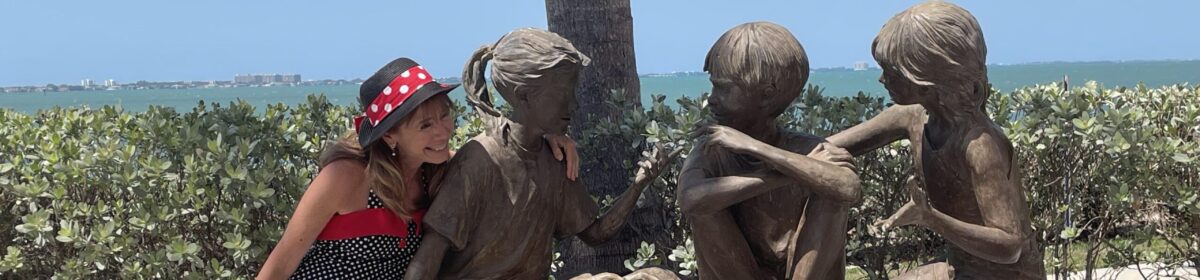
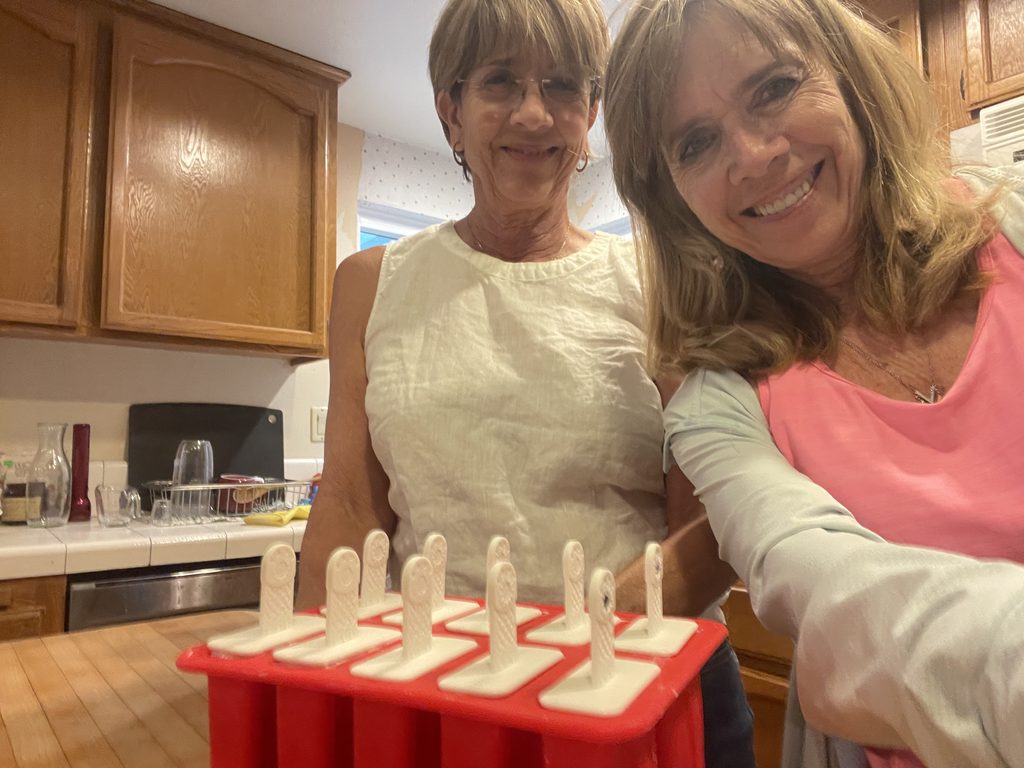
If you’ve been following my blog you know that in 2026, I’ve been celebrating the 26th of each month. On August 26th, I celebrated National Popsicle Day with Mom, and I’m with her again for the September 26th celebration of Save Your Photos Day.
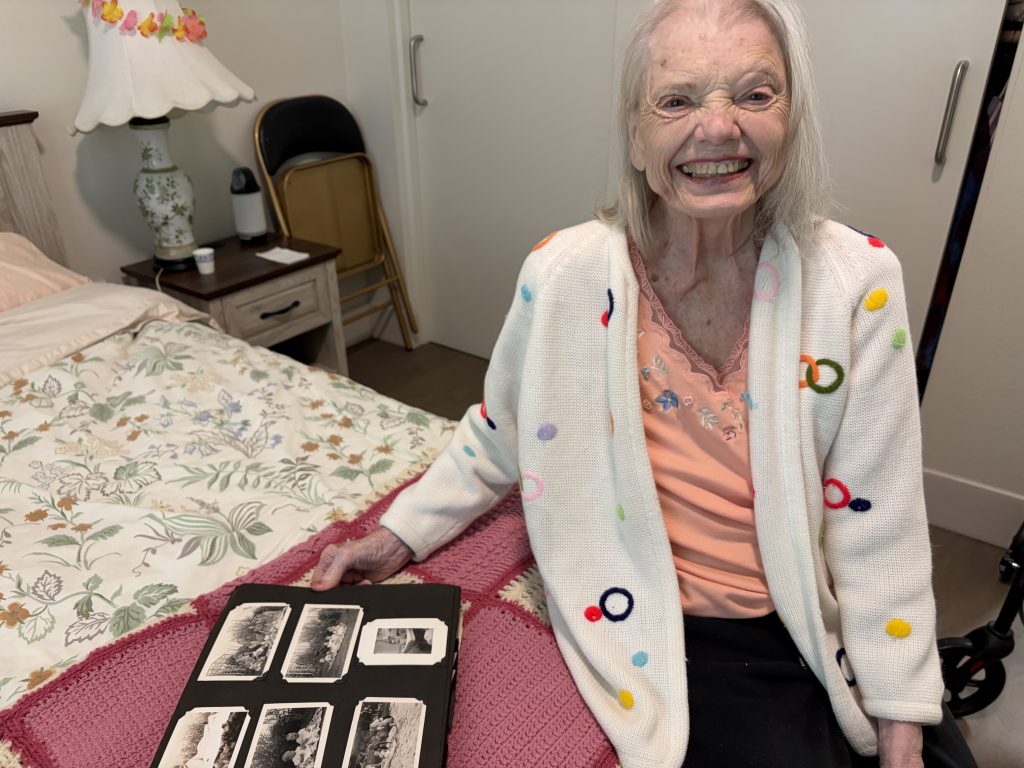
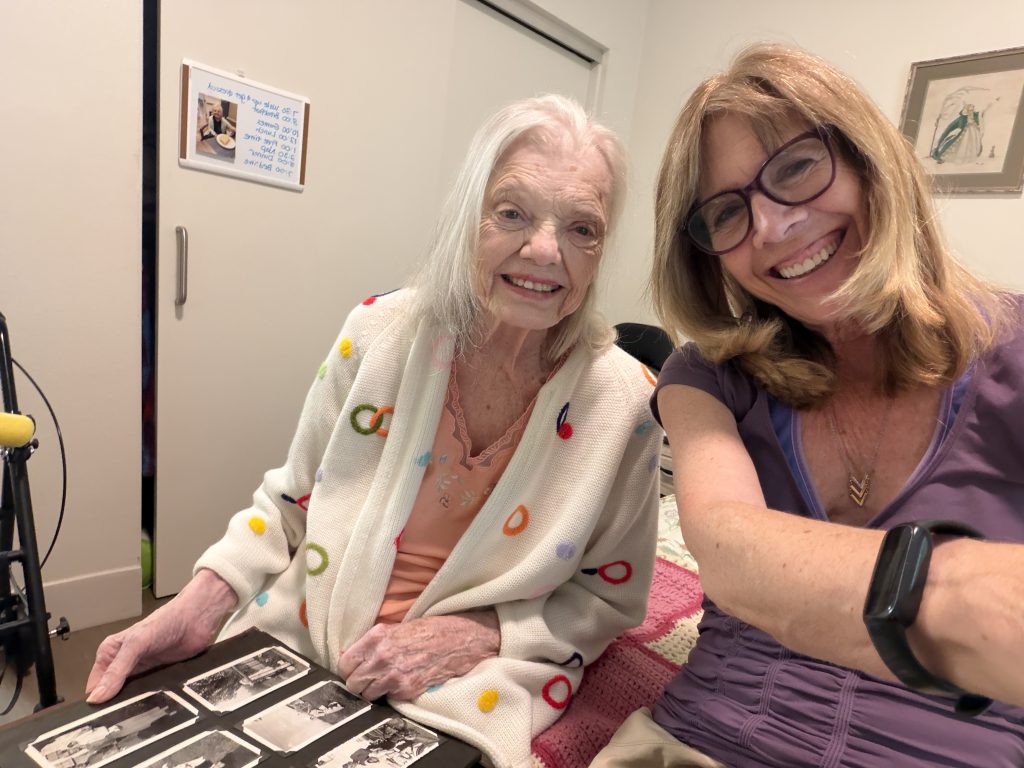
Celebrating National Save Your Photos Day with Mom looking through her original photo album
Capturing Mom’s Smile
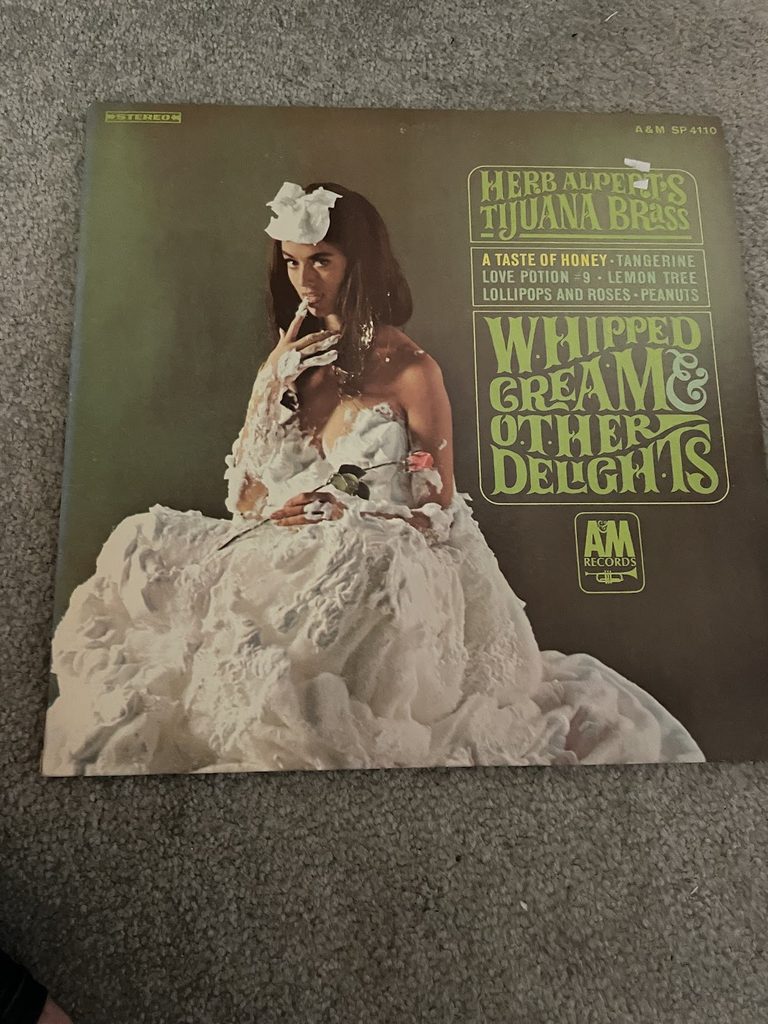
Every time I visit, I experiment with different and new activities, hoping Mom will get excited and get that big smile on her face. Last month, I bought a turntable and found the Tijuana Brass Whipped Cream album that we played a lot in the ’60s and ’70s. Mom didn’t recognize either the album cover or the music. Come to think of it, maybe it was Dad and my brothers that were so enamored with that album.
But when we started looking through her old album she proclaimed what a cute baby she was! She actually is quite cute at age 90, too, so I had to shoot a video to capture that smile:
A Trip Through Time
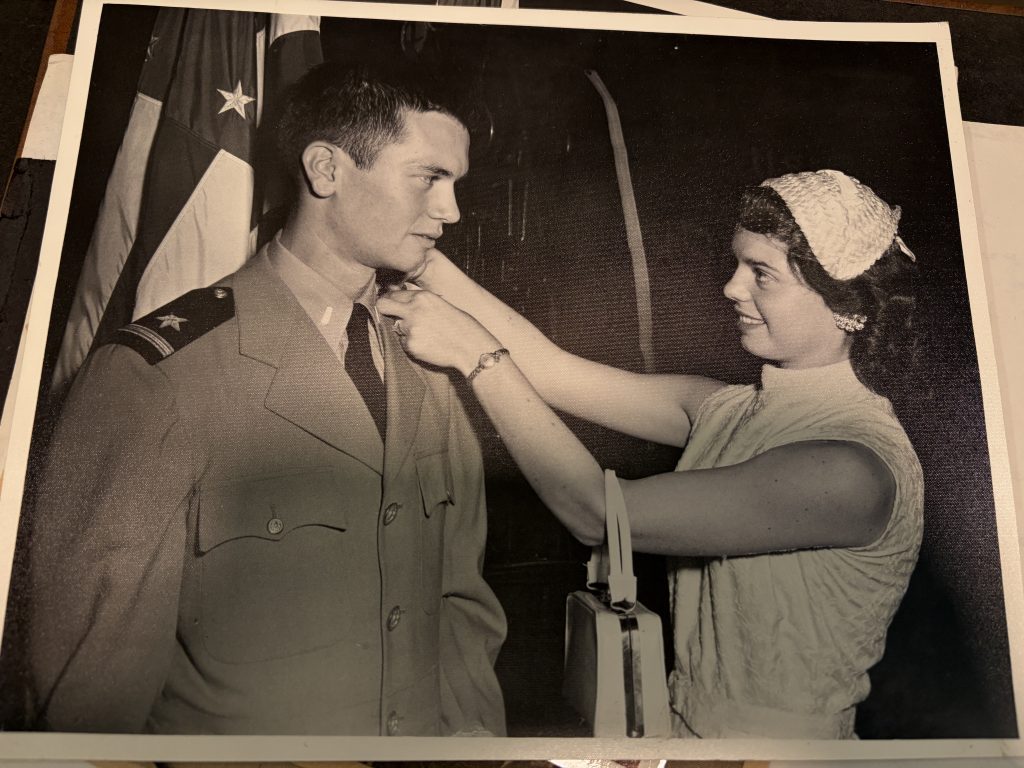
There was baby Mom, childhood Mom, teenage Mom, and eventually Mom dating Dad. I’ve known her my whole life, of course, but it’s still fun to see photographic proof that she had an entire life before I showed up.
Best of all, Mom was excited to look through the album with me. She recognized and remembered the names of even her parents friends. It’s interesting that this early period of her life is what she seems to remember most. She often seems to wake up thinking her parents are still alive and that her home is in Villa Park, Illinois, a place she hasn’t lived at for over 70 years.
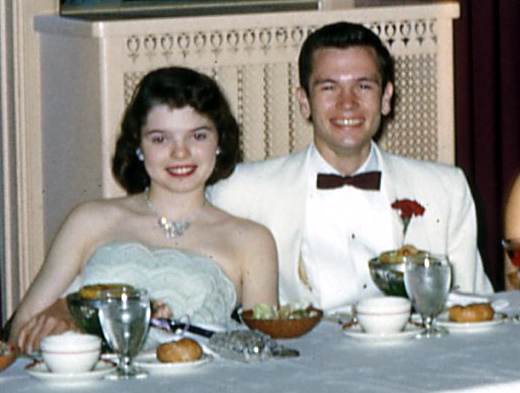
We lingered over the pictures, and she talked about them as we went. I loved watching her enjoy those sweet glimpses of her younger self. I especially loved the early pictures of her with my Dad. They were such a beautiful young couple.
Finding the Joy
A friend recently sent me Courtney Martin’s essay, “The 7 Stages of Elder Care.” One line especially stayed with me:
“The other thing you might remind yourself is that even the most painful of journeys have awe and meaning and intimacy within them.”
That afternoon with the album felt like one of those times. The challenges are tough, but they make the good days so sweet and meaningful.
Save Your Photos Day is a nudge to make sure our pictures don’t disappear into an old box—or the mysterious depths of our phones. I’m glad I saved Mom’s album. I’m even gladder I took it out and shared it with her.
I don’t know what our next visit will be like. This one was lovely, and I’m putting it in my own mental photo album.
Some friends send you a funny meme or an interesting article.
My friend Shirley sends those. She also sends opportunities to change your life.
Earlier this year, she forwarded information about a free online course in Dialectical Behavior Therapy, better known as DBT. The course was designed to take 26 weeks.
Twenty-six weeks!
Since my theme for 2026 is “Do What You Love: 26 in ’26,” I took that as a sign. Of course, the fact that Shirley was inviting me made it even more appealing. Learning DBT with friends sounded much more motivating—and more fun—than working through an online course alone.
What Is DBT?
DBT stands for Dialectical Behavior Therapy. It teaches practical skills in four major areas:
Mindfulness
Distress tolerance
Emotion regulation
Interpersonal effectiveness
The free course at DialecticalBehaviorTherapy.com includes 40 short lessons with videos, exercises, and worksheets. Although DBT was originally developed as a form of psychotherapy, its skills can also be valuable for anyone interested in personal growth, stronger relationships, and healthier ways of responding to life’s challenges.
One of the ideas at the heart of DBT is that two seemingly opposite things can be true at the same time. We can accept ourselves as we are and still work toward change. We can acknowledge that our feelings are valid without letting those feelings dictate our actions. We can care deeply about another person while also setting boundaries.
Life is rarely as simple as right or wrong, good or bad, acceptance or change. DBT helps us become more comfortable living in the “and.”
The Shirley Factor
Of course, signing up for a class and actually completing it are two different things.
That is where Shirley comes in.
Shirley is a deep thinker, a strong motivator, and one of the most curious people I know. She doesn’t simply skim information and move on. She studies it, takes copious notes, asks questions, makes connections, and thinks about how the ideas apply to real life.
When she invited me and a few others to take the course, she also created a WhatsApp thread where we could compare notes and discuss each lesson. That small act made a huge difference.
Instead of silently clicking through an online course by myself, I had companions for the journey. We could share insights, ask questions, and talk about which exercises resonated with us. Knowing that others were participating helped keep me accountable, but even more importantly, our discussions gave me an opportunity to dig deeper.
The course provided the lessons. Shirley helped create the learning community.
That is one of her gifts. She doesn’t just collect knowledge; she creates opportunities to explore and share it.
Learning Beyond the Lessons
Our conversations haven’t been exclusive to DBT lessons. We continued discussing other topics related to psychology, relationships, communication, and personal growth.
A few weeks ago, we even met for a quick retreat in the Santa Rosa area. Spending time together in person gave us another chance to talk, reflect, and exchange ideas. As always, Shirley arrived with an impressive amount of information and plenty of thoughtful observations.
Shirley gifted me the book Rolefulness: A Guide to Purposeful Living by Professor Daiki Kato and Nicholas Kemp. The concept of rolefulness encourages us to focus not only on goals, but also on the many roles we fulfill in our lives. It was a fitting gift from someone who is always introducing me to new ideas and encouraging me to look at life from a different perspective.
She is truly a wealth of knowledge. But what I value most is not simply how much she knows. It is her willingness to share what she learns and invite others into the conversation.
There is a special kind of friend who encourages you, challenges you, and helps you see things from a different perspective. Shirley is that kind of friend.
Knowledge Is Better When It Connects Us
The DBT course taught me useful skills for handling emotions, tolerating distress, practicing mindfulness, and navigating relationships. But the experience also reminded me of something I already believe deeply: learning is richer when it brings people together.
A free online course became much more than a collection of lessons. It became a reason to reflect, an invitation to connect, and another chapter in a meaningful friendship.
And, appropriately enough, it all unfolded over 26 weeks.
In my “26 in ’26” year, I’m celebrating not only the things I love to do, but also the people who inspire me to keep learning, growing, and connecting.
Thank you, Shirley, for sharing your wisdom, your motivation, your copious notes, your thoughtful gifts—and the journey.
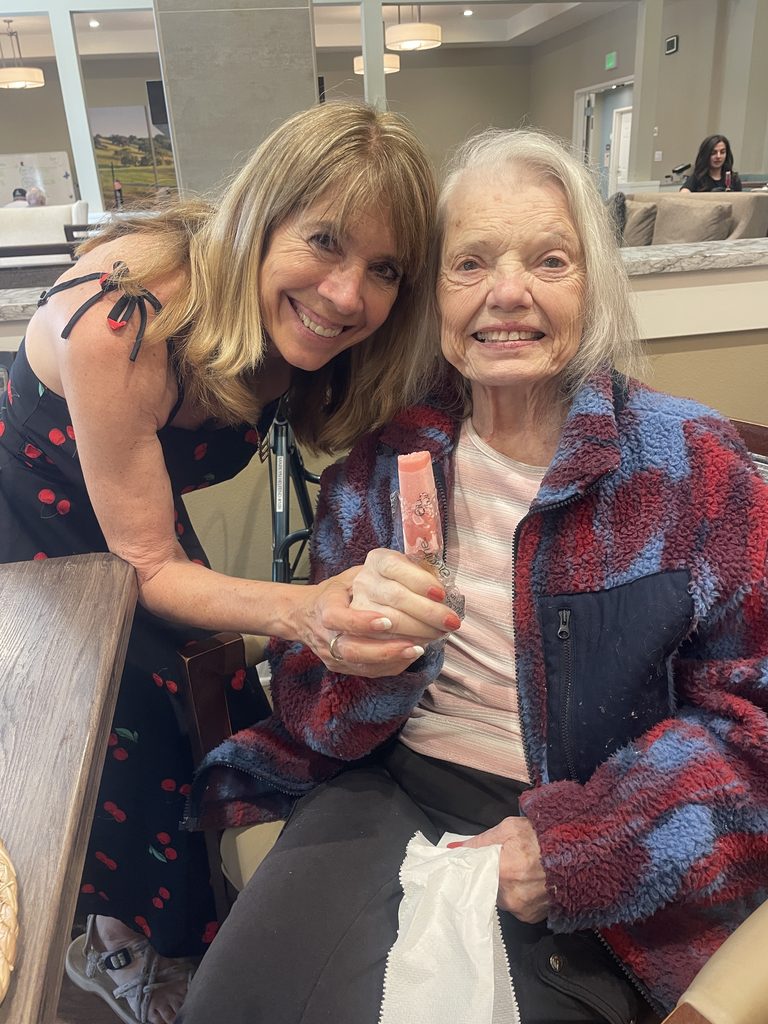
August 26 is the day, and when I discovered this important piece of information, I immediately decided that Mom and I needed to celebrate. Not only is it celebrated on the 26th (which is my theme number for 2026), but I already have a cherry dress! (I celebrated Cherry Dessert Day on May 26!)
Life has been pretty heavy lately. A cherry popsicle seemed like an excellent antidote.
My original plan was ambitious. I thought we could make homemade cherry popsicles with some of the residents at The Preserves. Michele and I experimented with cherry yogurt and imagined a charming little popsicle-making activity where everyone could participate.
Well…that was the plan.
Let’s just say that homemade popsicles are considerably more complicated than I’d imagined. The recipe book that came with the kit included recipes with at least five ingredients. I thought it was as simple as putting cherry juice in a mold, but…no. We tried putting yogurt in the molds, but that ended up being both messy and not very tasty.
So we pivoted.
Instead of making popsicles with the residents, we bought popsicles for the residents.
Sometimes my Carpe Diem adventures are simply going to the grocery store.
And everyone was perfectly happy.
A Difficult Season
The popsicle celebration came at the end of an especially emotional couple of weeks.
Mom’s health and cognition have been declining, and there have been some scary and difficult days. She’s had moments of confusion and fear that have been heartbreaking to watch.
That’s part of why I came to Los Angeles earlier than I had originally planned. I wanted to be there for Mom—and for Michele, too.
I spent most days with Mom over those two weeks.
When I’m there, I know my presence gives her a sense of security, and she is generally calmer.
That doesn’t mean every day is easy. There are still times when she’s frightened or doesn’t understand what’s happening. Other days, she’s simply exhausted and sleepy.
But there are also moments when everything seems to come together and she’s happy.
And those are the moments I’m savoring.
Old Friends and New Memories
The popsicles weren’t the only sweet moments I’ve had with Mom lately.
One of my favorites was helping her reconnect with her childhood friend, Rolly, over FaceTime.
They hadn’t talked in years.
Watching them see each other again was incredibly special. They were both so happy to hear one another’s voices and catch up.
I wish I could have recorded the call, but Mom was using my phone, so I’ll just have to remember her laughs.
Life Doesn’t Stop for Hard Times
In the midst of everything happening with Mom, I’d had a weekend getaway planned. Mom had been doing better, so I decided to carry out my plans for a weekend in Santa Rosa.
Somehow, I packed three wonderful events into one weekend.
I spent time with my friend Shirley.
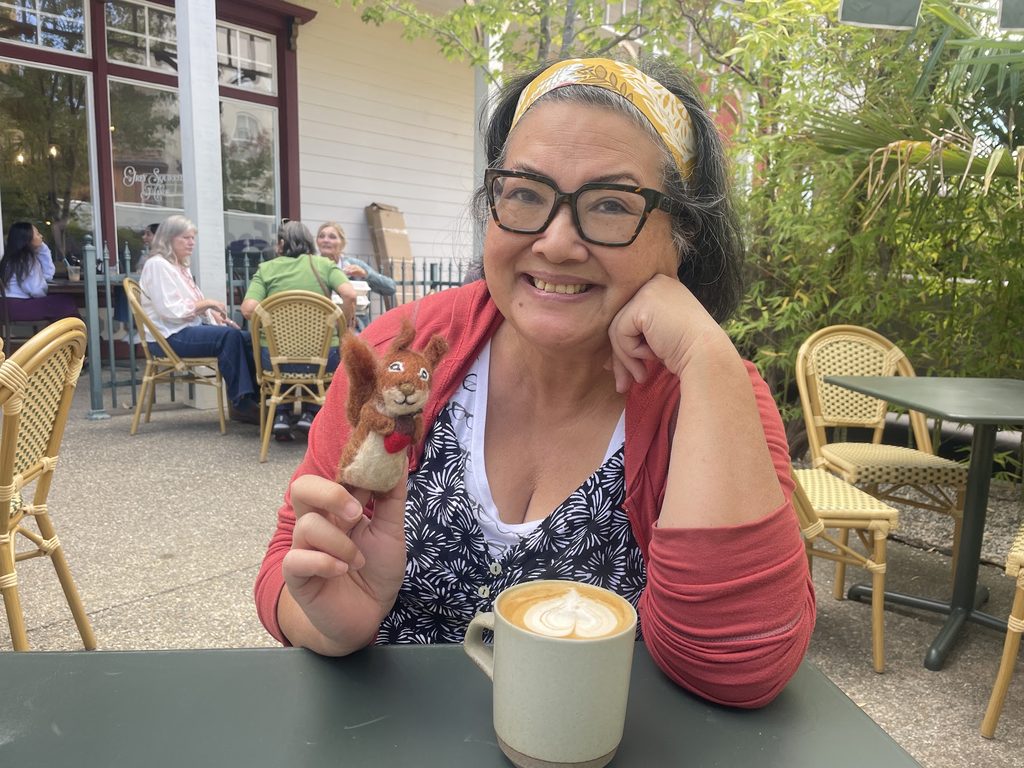
Shirley with her new Squirrel finger puppet at The Grey Squirrel Manor in Windsor, CA
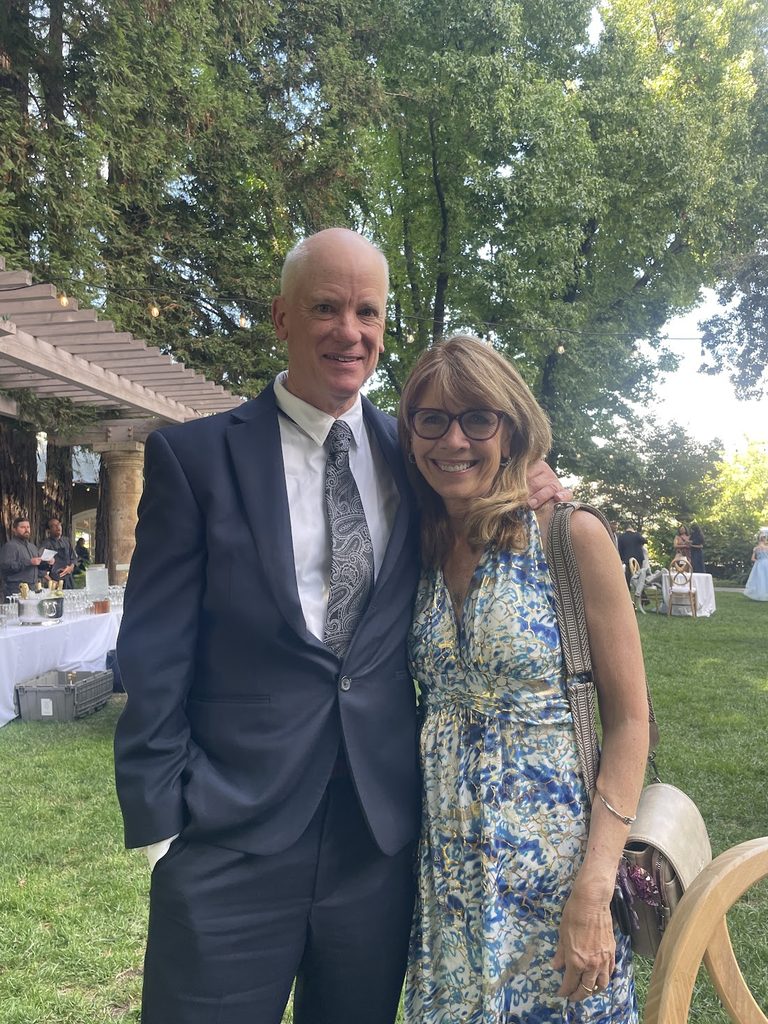
I attended the wedding of the niece of my longtime friend Jack.
Jack and me at his niece’s wedding.
And then I got to experience something completely different: the joy surrounding a brand-new baby, born to another of Jack’s nieces.
A wedding.
A new baby.
Old friends.
A childhood friend reconnecting with Mom.
Popsicles with a memory-care community.
All of these things happened within the same few days. Happy tears welled up during the joyful moments. Maybe when you’ve been carrying sadness, the tears are already there, waiting for any excuse to spill over—and happy tears are the best.
Alzheimer’s is sometimes called “the long goodbye” because we slowly grieve so many losses while the person we love is still with us.
But maybe that’s exactly why I want to savor the joyful moments in the midst of the grief.
The Gift of Saying Goodbye
There have been days when Mom has desperately wanted me to stay. Leaving her has been heartbreaking on those days.
There have also been days when Mom has been surrounded by kind staff and familiar residents and has felt secure enough for me to leave without tears.
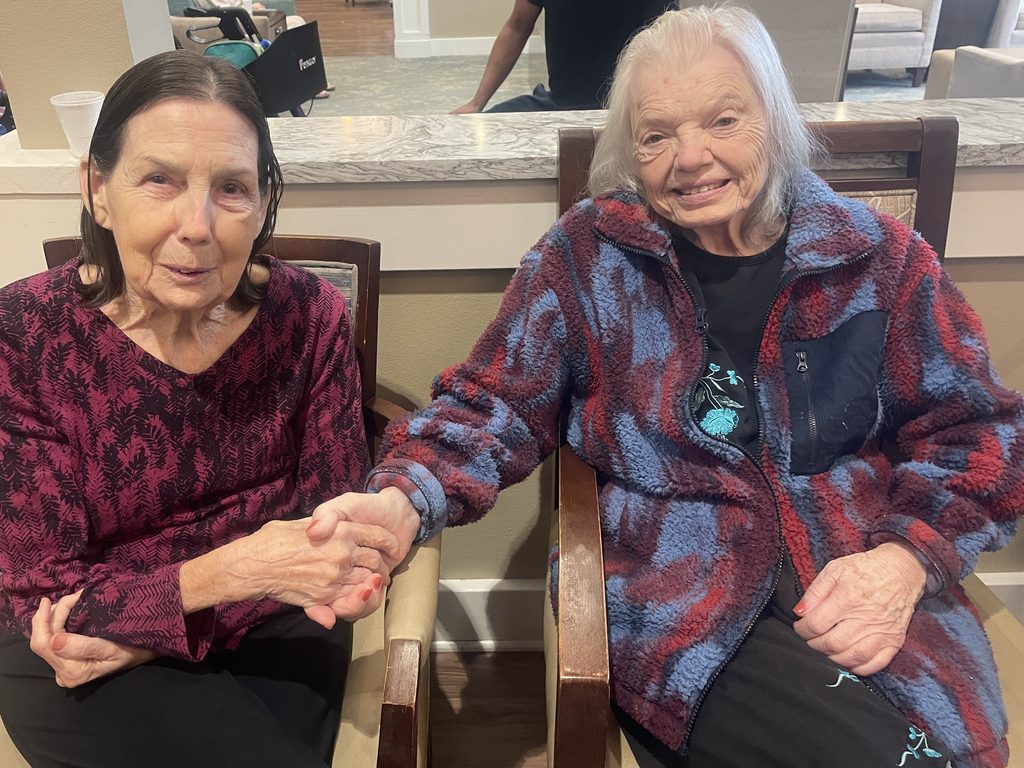
On Thursday, the day I was flying back home, she was sitting happily with her friend Debbie. They held hands and vowed to support one another.
That made leaving a little easier.
I’m also deeply grateful that Michele is nearby. Having someone who loves Mom and can be there when I can’t is an enormous comfort to both of us.
Carpe Diem, Even When Life Is Hard
Now I’m back home, slowly catching up with all the email and stuff I normally do when I’m here in Colorado. Celebrating my grandkids’ birthdays, cleaning my house, and (most importantly!) catching up on my CarpeDiemDay blog post!
I talked to another friend today who was feeling restless about aging and worrying about some recent health scares.
I told him, “I have a goal to find joy wherever I am and whoever I’m with. And that works pretty well, even when life is hard.”
Maybe that’s what these past few weeks have reminded me.
Finding joy doesn’t mean ignoring the grief or pretending the hard things aren’t hard.
It means noticing the joy that’s right there beside them.
Sometimes it’s a wedding.
Sometimes it’s a new baby.
Sometimes it’s hearing your mom laugh with a childhood friend.
And sometimes it’s a cherry popsicle on a hot day.
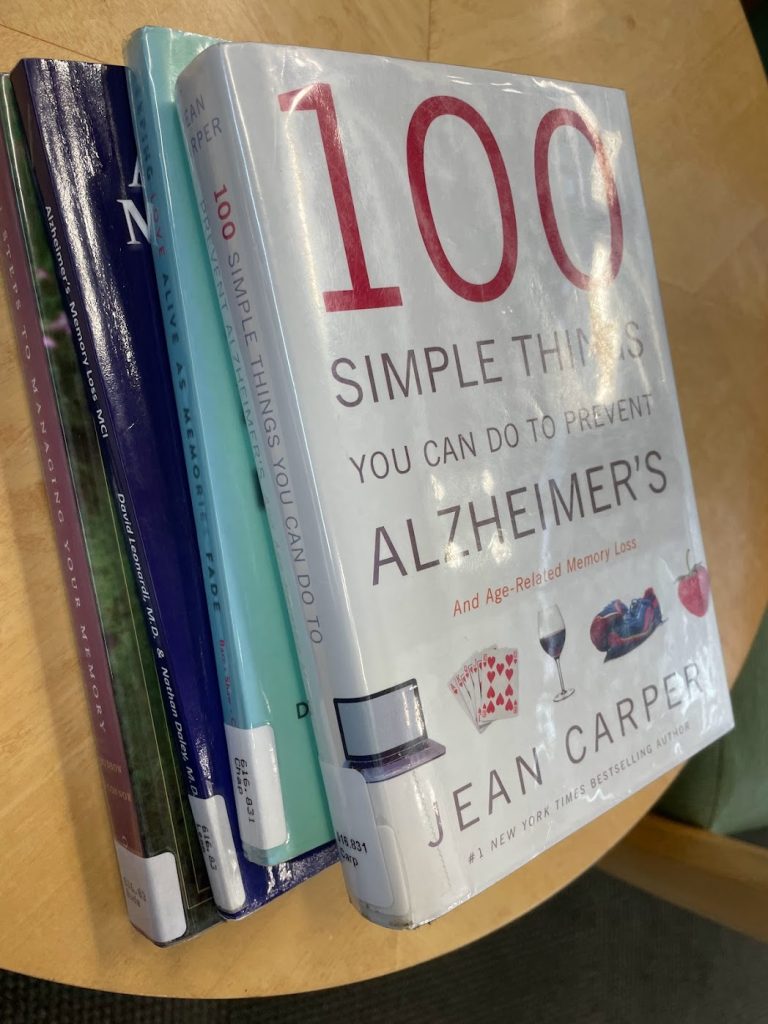
When I was young, I remember thinking the two worst diseases anyone could have were ALS and Alzheimer’s. Little did I know that I’d have the privilege of being part of the journeys with both these diseases with people I love.
I learned so much about living in the two years my friend, Craig, was living with ALS. And now, since my Mom has been diagnosed with Alzheimer’s, I’m again reminded how important it is to live each day with joy and without regret.
Alzheimer’s Diagnosis Doesn’t Stop Glen Campbell
The other day a friend sent me a YouTube video of Glen Campbell singing “Wichita Lineman.” I was curious about Glen Campbell’s story. When I checked his Wikipedia page, I saw that he’d died from Alzheimer’s in 2017.
After his diagnosis, he went on his final tour – which included 151 concerts. His family made a documentary to raise awareness and funding for Alzheimer’s Disease. What a hero he was. Not only was he a musical genius, but with his courage to carry on and continue sharing his gifts despite his diagnosis.
Hope for the Future of Alzheimer’s
Even before Mom’s diagnosis, I was very interested in brain health and interviewed Baroness Susan Greenfield on my podcast. That was over 5 years ago, and there was cautious optimism about new drugs.
Since Mom’s diagnosis, I’ve immersed myself in learning everything I can about Alzheimer’s disease, dementia, and brain health.
The progress over the past few years has been encouraging. Scientists have developed biomarkers that can identify risk much earlier than before. New medications are beginning to slow the progression of Alzheimer’s for some people. Researchers continue to deepen our understanding of the disease, and growing evidence suggests that lifestyle choices—including exercise, sleep, nutrition, social connection, and lifelong learning—may help reduce our risk and promote healthier brains.
We Can All Join the Fight
I’ve also become more involved with the Alzheimer’s Association through education and volunteer opportunities. The more I learn, the more convinced I become that brain health matters for everyone—not just those who are at risk or have been diagnosed with Alzheimer’s.
Whether or not dementia ever touches our families personally, we all have a stake in protecting our brains and supporting the scientists, caregivers, and advocates working toward a world without this disease.
Together—through research, education, healthy living, compassion, and hope—we just might defeat Alzheimer’s.
I wrote about Purpose in Retirement 3 years ago. It was the first topic in my Year of Learning. As I said in that post, I find a lot of purpose by achieving goals.
Every couple of weeks I sit down to write another blog post. Sometimes I wonder, “Why am I doing this? Is anyone even reading these?” Without a boss, deadlines, or expectations from anyone else, it’s easy to question whether the time is worthwhile.
I’ve discovered that I’m much less motivated when no one is holding me accountable. There’s no boss expecting results—only that little voice in my head reminding me I’m behind. (Another goal is teaching that voice to relax.)
What is the Purpose of Blogging?
Seasoned goal-setter that I am, I always want to have some way to measure if my efforts are paying off the way I’d hoped. When I’d created this Website, I’d wanted it to be a way to promote “Living Life Fully” in honor of my friend, Craig, who exemplified that attitude despite an ALS diagnosis.
Though I feel proud of my Website, I haven’t focused much on promoting it, and there are certainly many other higher-quality sites that spread goodness and messages about living life fully.
That’s when I begin wondering whether I should spend my time doing something more productive—or, maybe the opposite, invest much more energy into improving and promoting the site.
Blogging is a way for me to have a little legacy – something that I hope will still be here after I’m not. Years from now, my children or grandchildren may stumble across these thoughts and better understand what mattered to me. Even if the audience is small, writing helps me leave behind more than photographs—it leaves behind my values.
I tried to improve my blog in the 2nd month of my Year of Learning, when I was learning about blogging! So at least blogging serves the purpose of reminding me of topics I’ve already grappled with!
I would like its [the CarpeDiemDay Website’s] primary purpose to be to promote others and other sites who are spreading messages about living life to the fullest.
I recently discovered Brian Jeansonne. His story deserves much more than a mention and I intend to write much more about him in the future. (Spoiler alert: He will be my next Carpe Diem Hero.)
He not only exemplifies living life to the fullest, but ends every one of his messages with “Love.”
The following video is so powerful. Brian finds humor, even in describing his own tragic story with ALS. Since Carpe Diem Day started on this very premise – resilience in the face of ALS – I wanted to share his video here.
I bought Brian’s book, “Onward, Forward” and I’ve been following him on social media. He’s an incredible man.
Summary
It’s good to revisit our purpose and goals throughout life. In my case, blogging not just helps me stay accountable, but helps me remember previous conclusions!
The purpose of this Website isn’t to accumulate followers or page views.
It’s to remind myself what matters—and to share stories of people like Brian who embody love, resilience, courage, and living life fully.
I’m going to do one of those easy blog posts… light on words, but I’ll let the pictures and smiles do the talkin’.
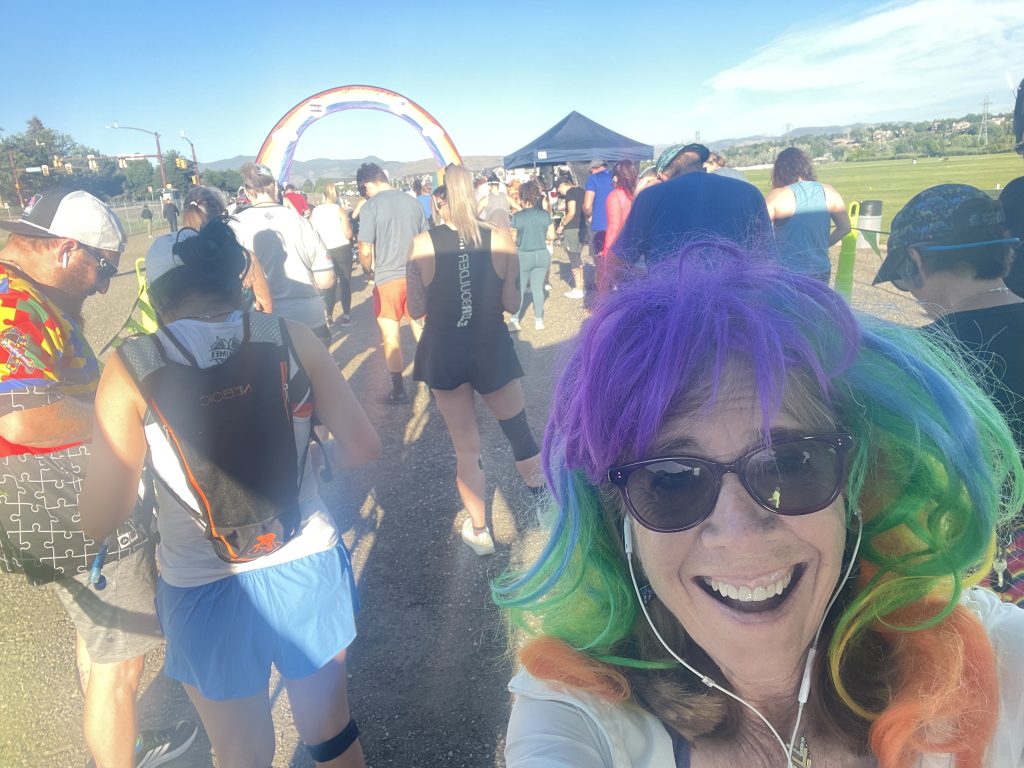
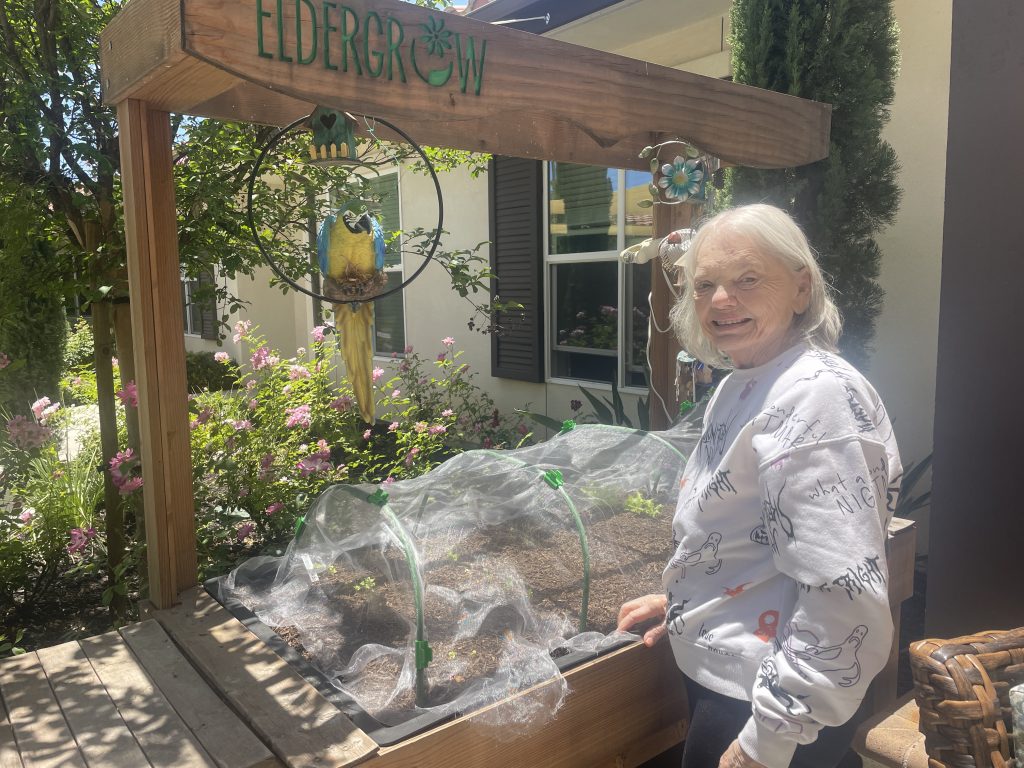
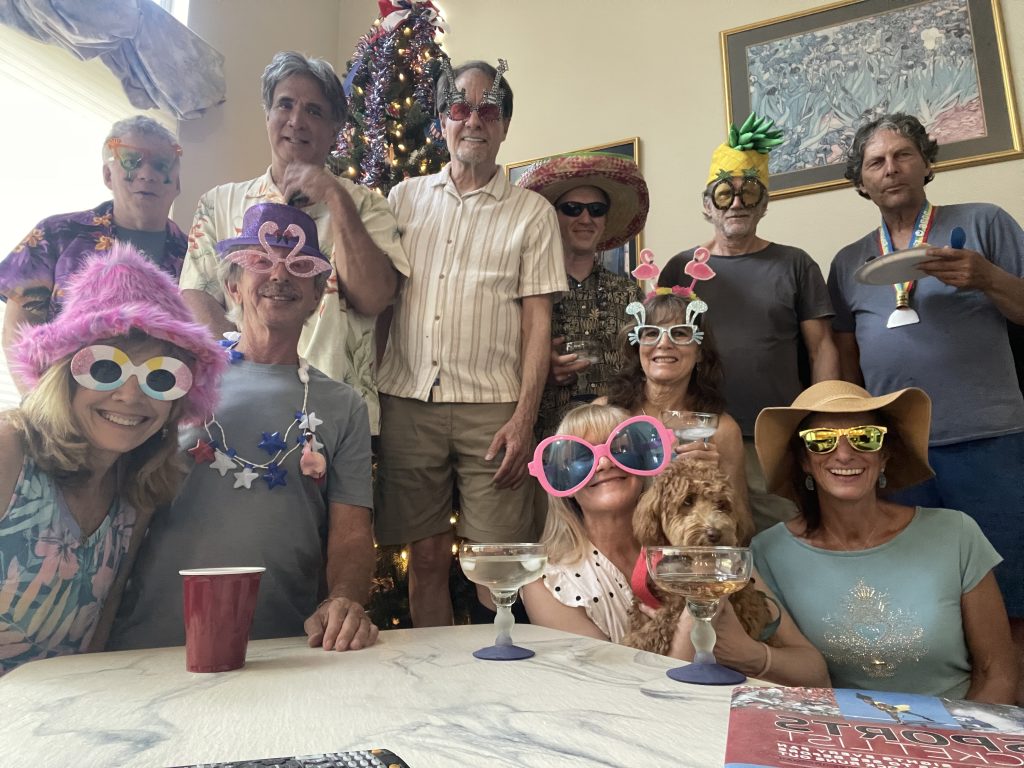
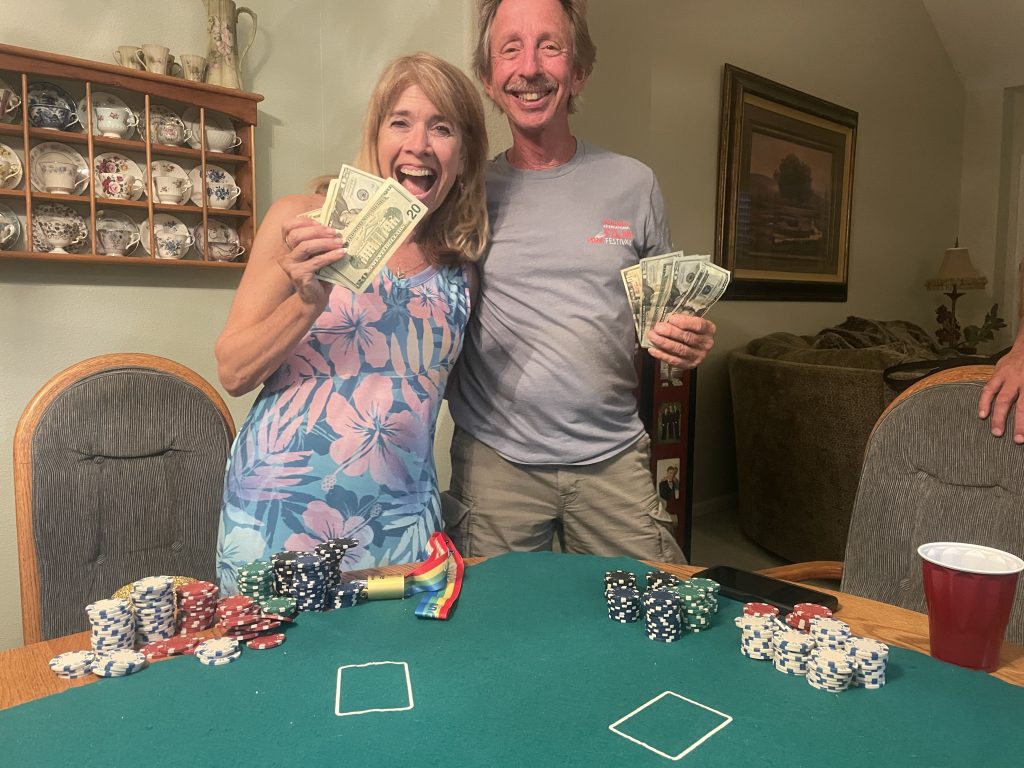
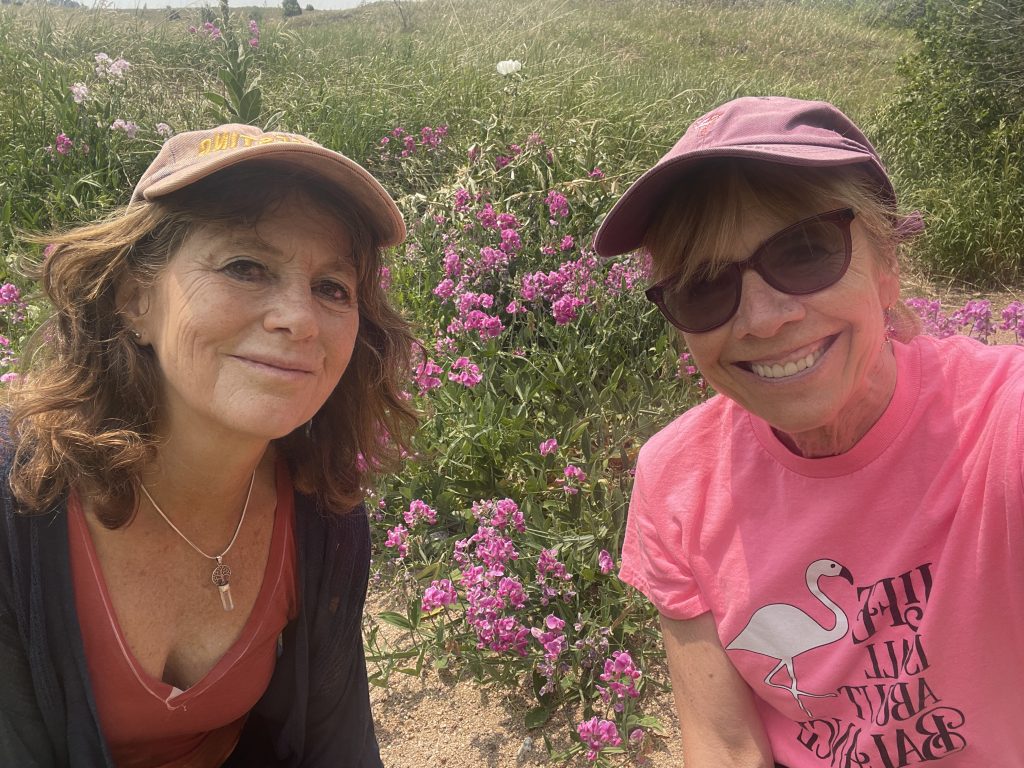
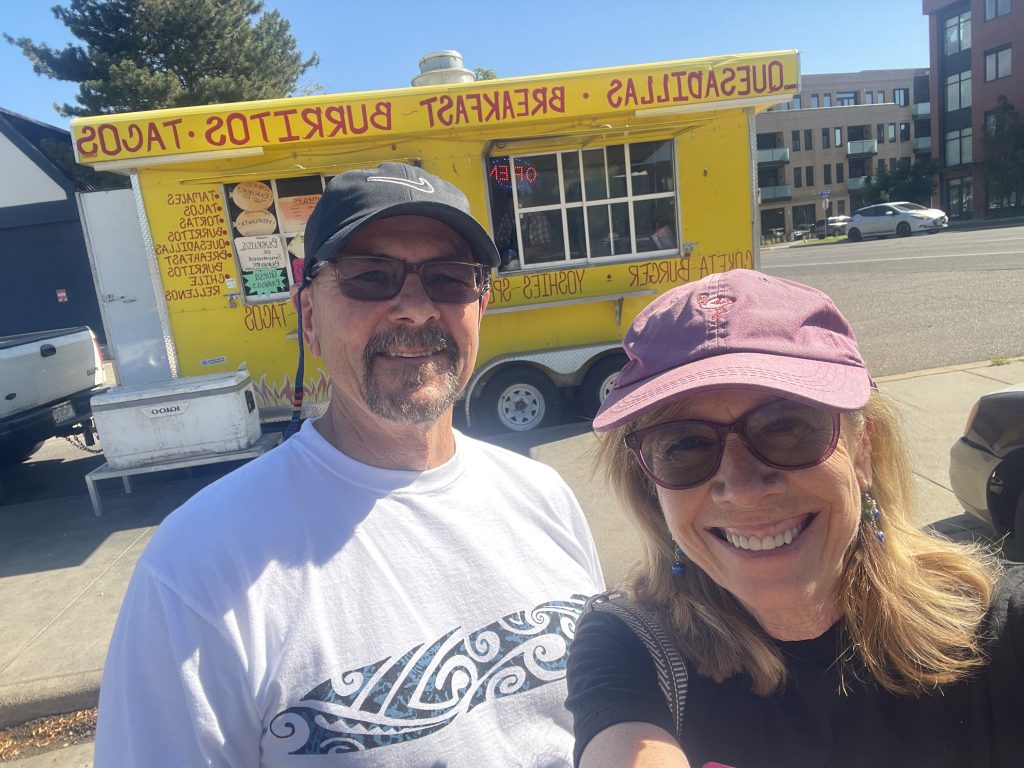
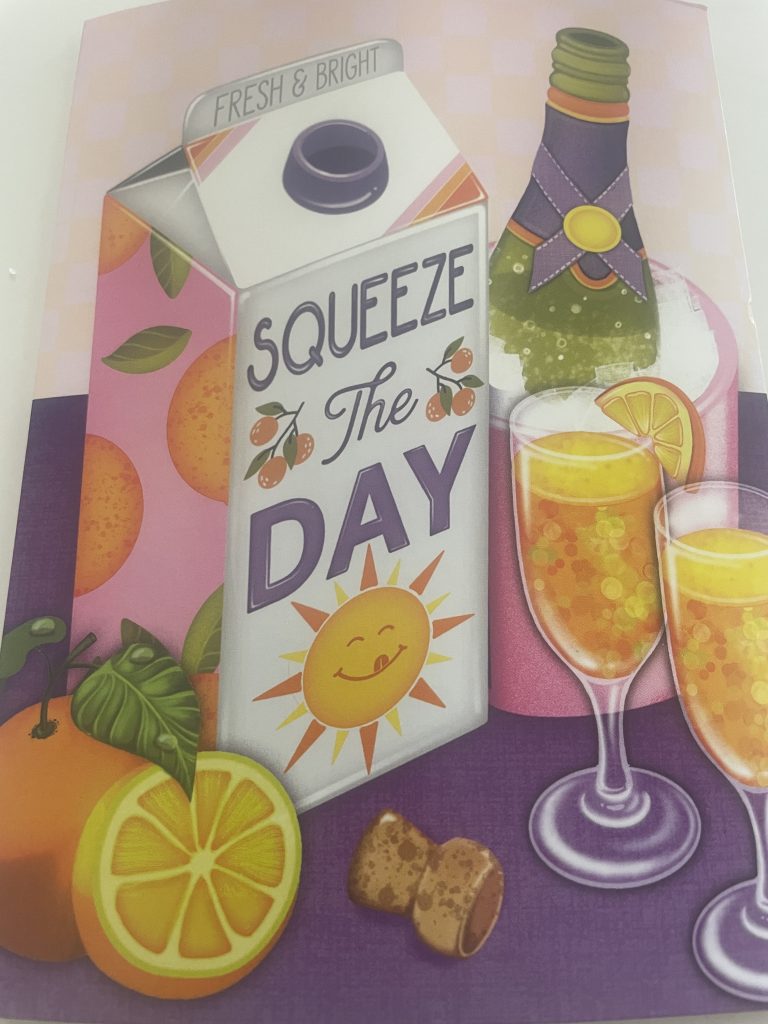
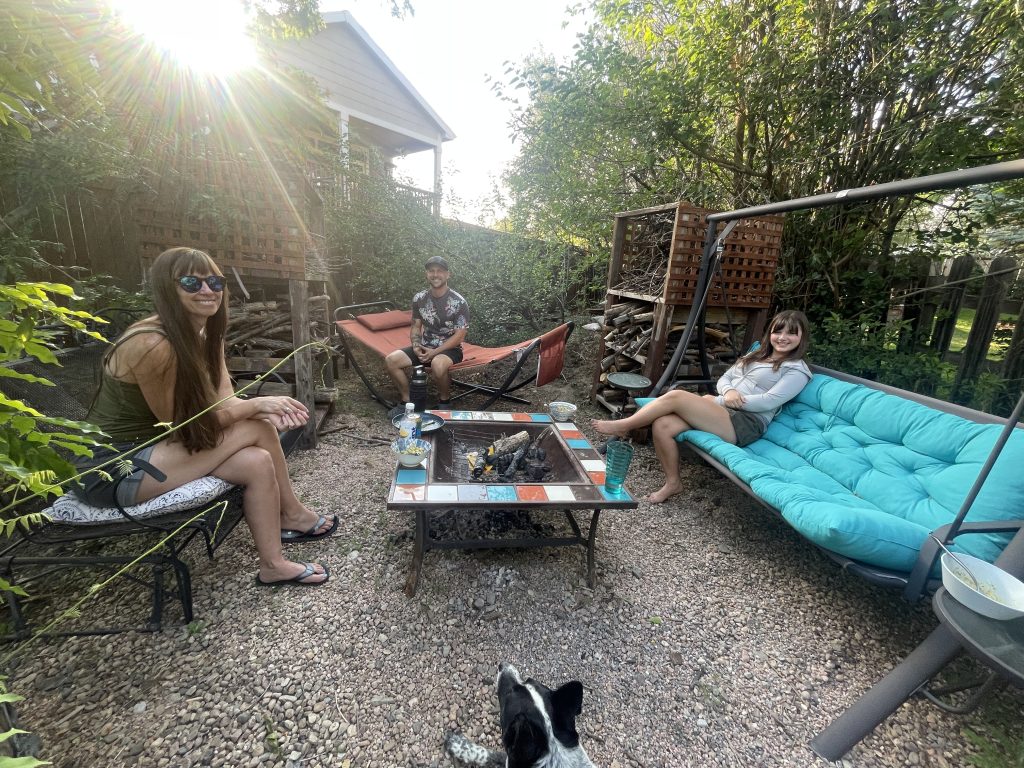
Winning 1rst place for my age group at the Arvada Summer Breeze 5K!June visit with Mom out in the courtyard community herb garden at The Preserves of Woodland HillsHosting a Summer Potluck Poker Party..…And winning! (Well… Will and I decided to split the pot rather than go to the end, but I had more chips.)Hiking with Cathy on National Flamingo Day! (After our weekly estudio de español leyendo *El Hobbit*Celebrating June 26th – National Food Truck Day with a Breakfast Picnic with J.J.Getting a Surprise “Squeeze the Day” Greeting Card from Matt & Stella in the mail! June 26 was also Tropical Drink Day so this was very topical as well as tropical!Celebrating my son-in-law, Chris’s 43rd birthday with an outdoor dinner around their cute firepit.
Another thing that I enjoyed listening to the audiobook Theo of Golden. Highly recommended!
How about you? What have been some of your fun summer moments? What are you looking forward to this summer?
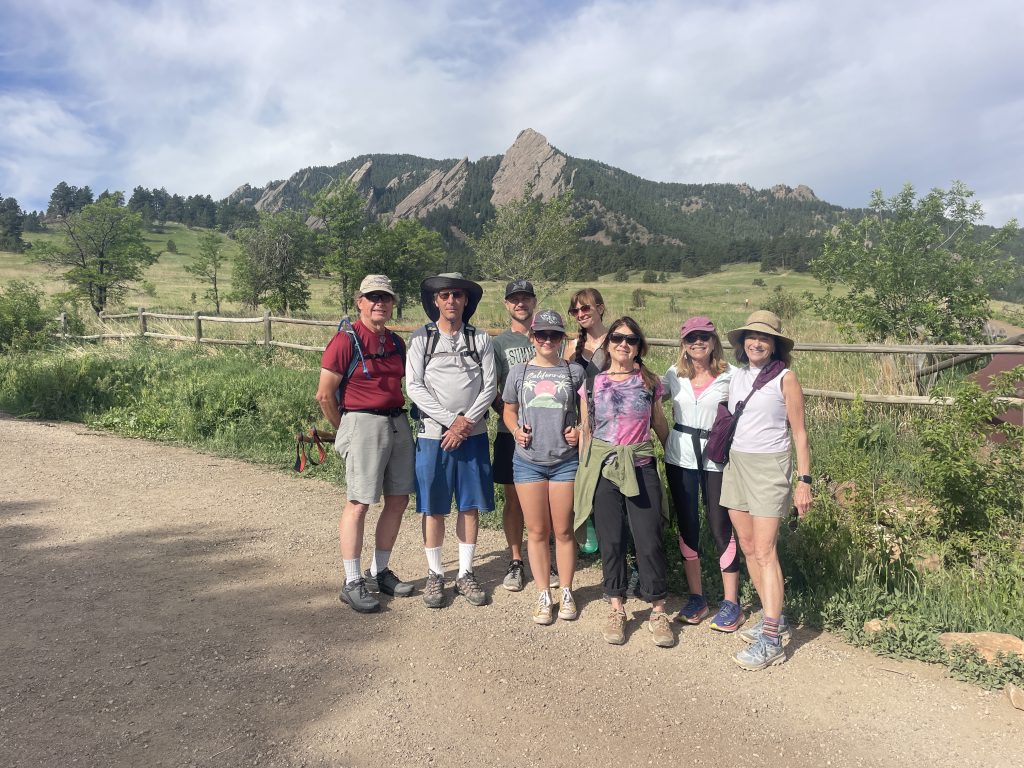
Aging Adventurously Day with friends and family at Chautauqua Park, Boulder
When I first heard about Road Scholar’s Age Adventurously Day, I knew I wanted to participate. After all, that’s what this Website is all about! Seize the Day, Age Adventurously… Pretty much the same thing! And it’s even a quirky holiday, just like Carpe Diem Day!
Originally, I planned to hike Royal Arch in Chautauqua Park. Then my ankle started bothering me, and I switched to a gentler hike on the Mesa Trail. As often happens, some of my plans changed, but adapting is a big part of aging adventurously.
One of the things I love about adventure is that it looks different for different people.
My daughter Megan, son-in-law Chris, and granddaughter Reneya chose to tackle Royal Arch. Other friends joined me for a more leisurely hike through the beautiful meadows and forests of Chautauqua. We all met afterward for a picnic lunch, stories, laughter, and shared goodies (including my signature banana-walnut chocolate chip muffins!)
Honoring Dee – Now on the Ultimate Adventure
The hike itself was wonderful, but the real reason this day felt special was Dee O’Malley.
Dee passed away on May 25 at the age of 93. If you’ve followed my blog for a while, you’ve probably heard me talk about Dee before. She was one of those rare people who made everyone around her want to live a little bigger, love a little deeper, and say “yes” to one more adventure.
Most of us think of adventure as something external—a trip, a hike, a new destination. But Dee’s answer taught me that adventure is really an attitude. It’s the willingness to stay curious. To keep learning. To keep connecting. To keep saying yes, even when life becomes uncertain.
Adventure can be climbing a mountain.
Adventure can be learning Spanish.
Adventure can be making a new friend.
Adventure can be singing with a perfectly imperfect voice.
Adventure can be starting medical school in mid-life.
Adventure can be playing the piano for a memory care community you’ve grown to love.
Adventure can be facing the end of life with courage and curiosity.
The Age Adventurously Day Movie
To honor Dee, I created an iMovie slideshow from our day using “Climb Every Mountain” as the soundtrack. The music is special because it was Dee’s favorite song. The perfect song describing climbing mountains, literally and metaphorically! The recording features my mother and my son Scotty singing while I accompany them on the piano. Three generations, making music together, imperfectly but joyfully.
The movie has photos and video clips from our Chautauqua adventure today, an adventurous shot of my friend, Cathy (who wasn’t able to make the hike) and a few clips of visits with Dee and my mother.
I love how it turned out!
Connection, Learning, Growing, Sharing.
As we shared lunch under the trees, I felt grateful for my friends and family. I felt grateful for Dee and all the wisdom, humor, and adventures she shared with our family.
I know there are adventures still to come, mountains still to climb.
And some day, when I take that ultimate adventure, I feel grateful that Dee will be there again to lead the way.
Some people bring joy wherever they go. For me, Patsy is one of those people.
So when my lovely friend Patsy texted to say she’d welcome a visit from me, I immediately started looking at flights. She mentioned that her son, Chris, would be home in St. Augustine for the month of May, and she asked how my mother was doing. Patsy and I keep up with each other on Facebook, and I’ve always admired how engaged, curious, and tech-savvy she is. I had missed my visits with her, and when Patsy extends an invitation, I do my best to say, “YES!”
This year my theme is 26. I’ve challenged myself to have 26 adventures and to celebrate the 26th of every month. When I discovered that a May 25–28 trip would fit perfectly into my schedule and include my celebratory May 26th, it felt meant to be.
Even better, May 26th happened to be National Cherry Dessert Day. Naturally, I took that as a sign to buy a cherry-print sundress and matching jewelry for the occasion!
Patsy is like the cherry on the top of an ice-cream sundae
It seemed fitting that my May 26th celebration would revolve around cherries, because Patsy herself is like the cherry on top of an ice cream sundae.
She has a gift for making people feel welcome, valued, and loved. Time spent with Patsy is like that sweet cherry you savor. While the cherry sundress was fun, the real treat was getting to spend time with her.
Patsy and My Mother – So Much Alike
One of the reasons I’ve always felt drawn to Patsy is that she reminds me so much of my mother.
They are both warm, kind, charismatic women who light up a room. My mother was popular with the boys as a young teenager, and, not surprisingly, so was Patsy. They were both young brides married to military men, and both embraced the adventure of raising growing families.
As my mother’s dementia progresses, I sometimes feel as though I’m slowly losing little pieces of her—her stories, her memories, and parts of the personality I’ve known all my life. That’s one reason my friendship with Patsy means so much to me.
Of course, no one could ever replace my mother. But learning about Patsy’s life and hearing her stories helps fill a space in my heart. While I am losing pieces of my mother’s memories, I feel fortunate to be gaining pieces of Patsy’s. Every conversation gives me a deeper appreciation for a remarkable woman and for the generation she represents.
Patsy’s Biography
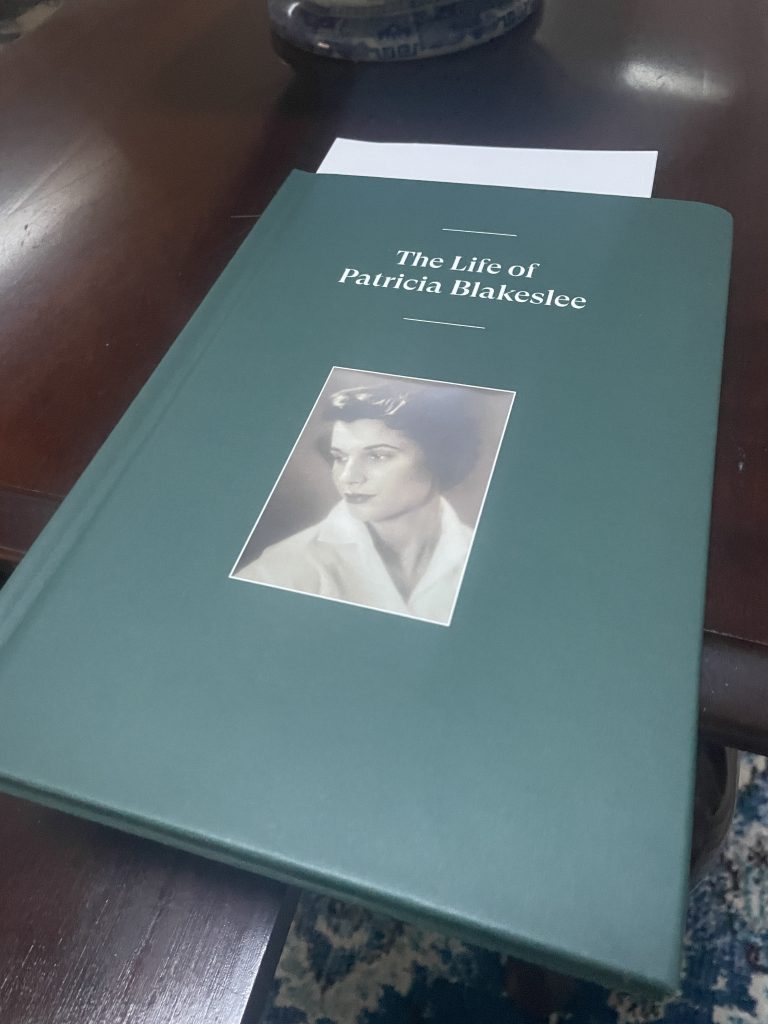
During this visit, I had the opportunity to learn more about Patsy’s life. I knew she had been recording her memories and stories with her daughter, Bonnie, and I loved getting to read the finished biography.
That was especially meaningful because I’m working on my own life story this year through a MyStories subscription that Matt and Stella gave me for Christmas. Listening to Patsy’s memories and reading her book reminded me how important it is to preserve our stories—not only for ourselves, but for our children, grandchildren, and future generations.
Beaches, Games, and the Best Adventures
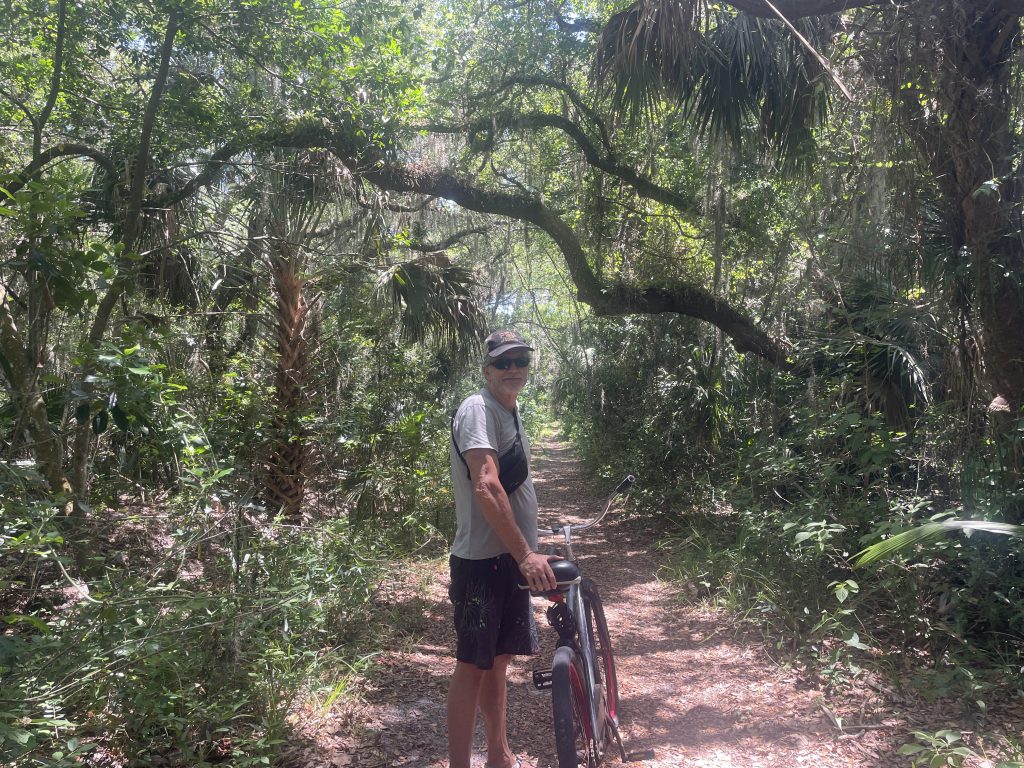
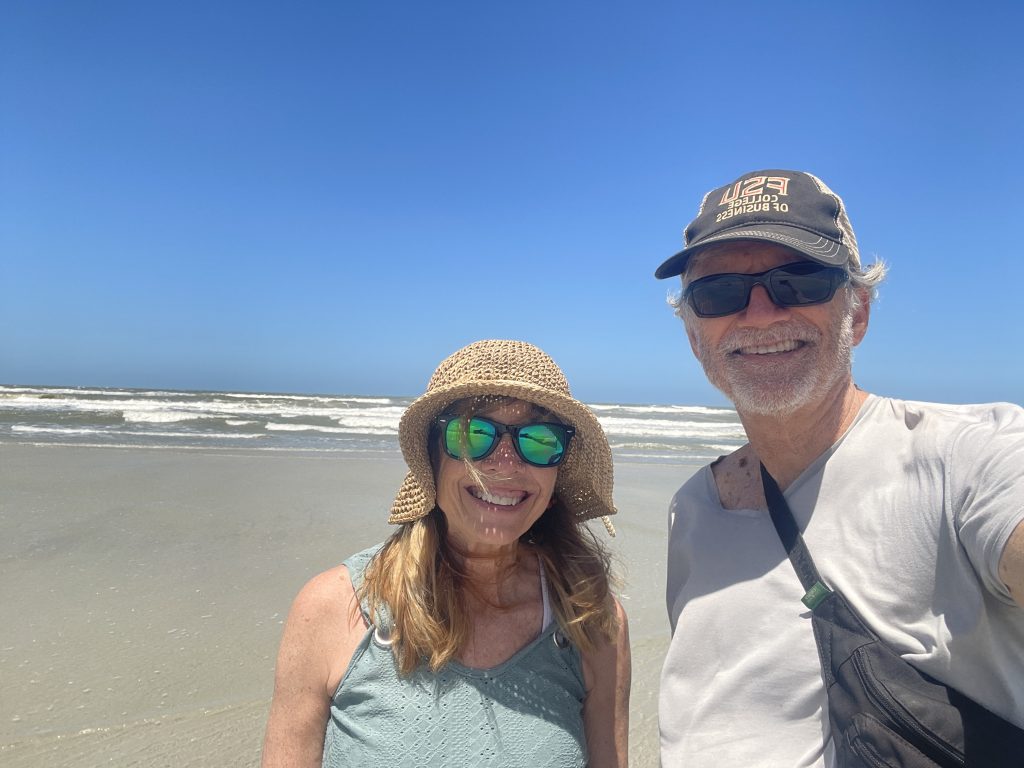
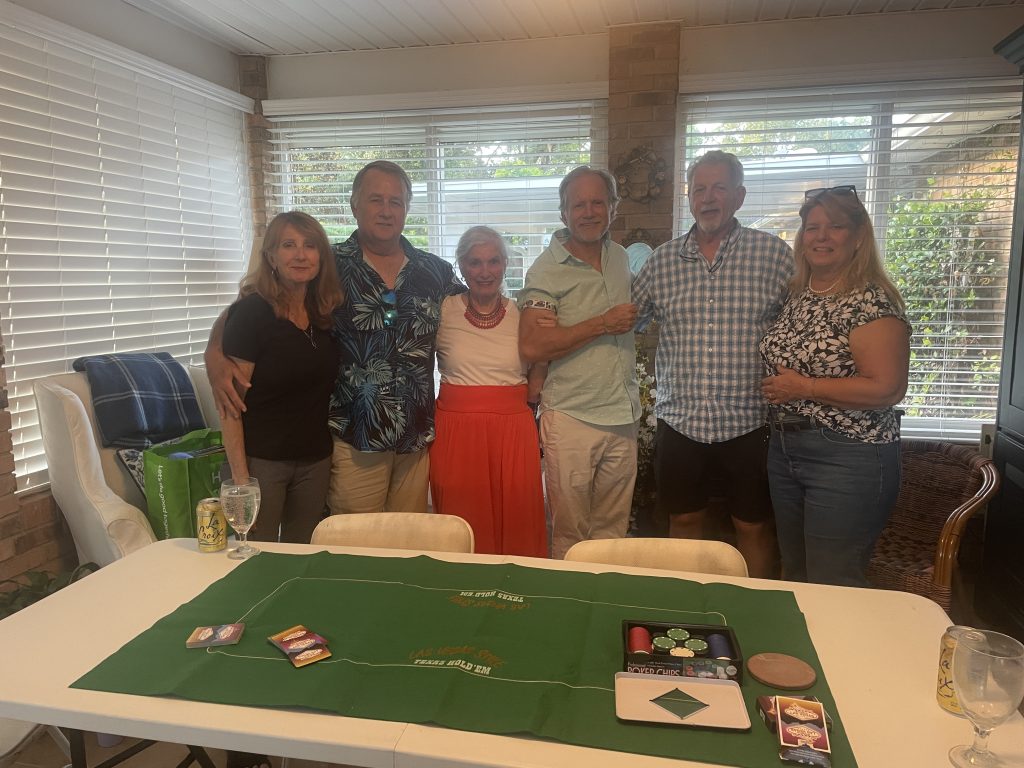
Biking to the beach with ChrisBeautiful Beach WalkPlaying poker with the Blakeslee Family
I also feel incredibly grateful to Chris for sharing both his mother and his family with me.
This short trip included a bike ride to the beach, good food, and an evening of poker and games with Patsy’s family. Beaches, games, and family are three of my favorite things, so it was hard to imagine a better combination.
What made it even more special was being welcomed into those family moments. Chris and his family make me feel like an honorary member of the group, and I appreciate every minute of it.
I’ve learned that the best adventures are spending time with people you treasure, listening to their stories, sharing laughter, and creating new memories together.
My May 26th celebration included sunshine, beaches, bicycles, poker, and family. But the best part (the cherry on top!) was Patsy—and that made it unforgettable.
Many years ago I began my obsession with happiness. One of the most effective and simplest practices to increase happiness is to write a gratitude journal. Another is to take pictures of simple things that make me happy. I also have a practice of writing a blog post every other Sunday about something that makes me happy.
I missed last night’s blog post, and I’m now at the airport waiting for a spontaneous flight to Florida to visit friends, Patsy, Chris, and Eva. (Undoubtedly, this will be the topic for my next blog post.)
To make things easy and fast, I’m just going to post some of the pictures from the last few days with a little explanation of why these things made me happy!
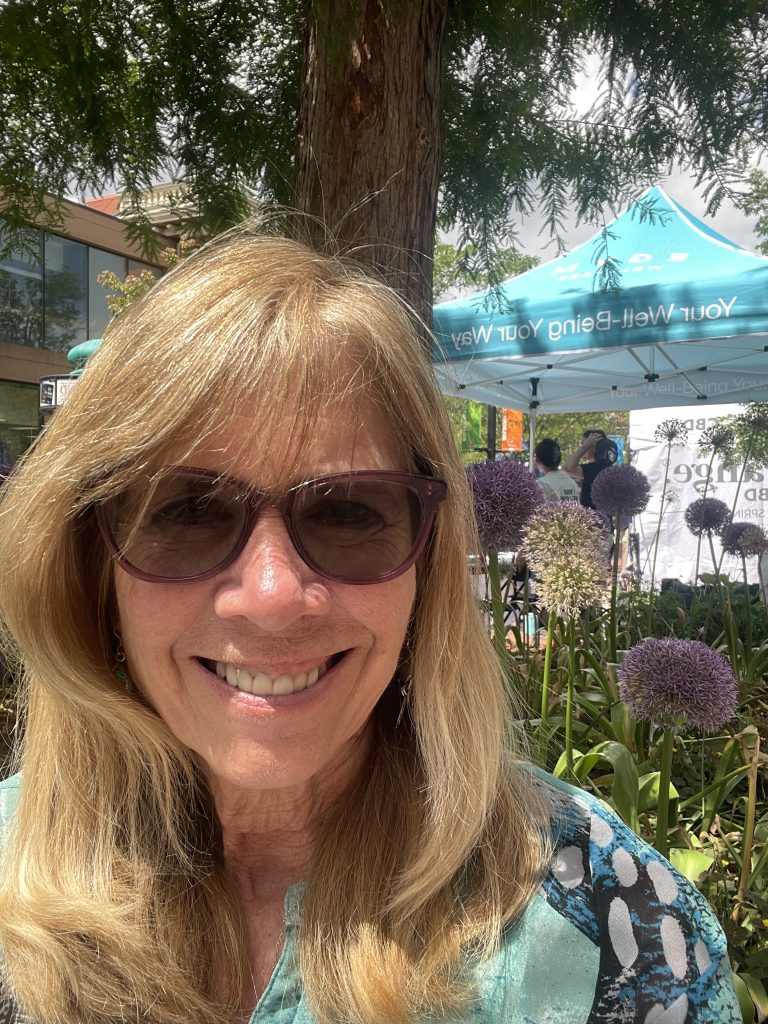
One of my favorite places in Boulder is Pearl Street, especially on a beautiful sunny day! Those purple flowers behind me bring me joy.
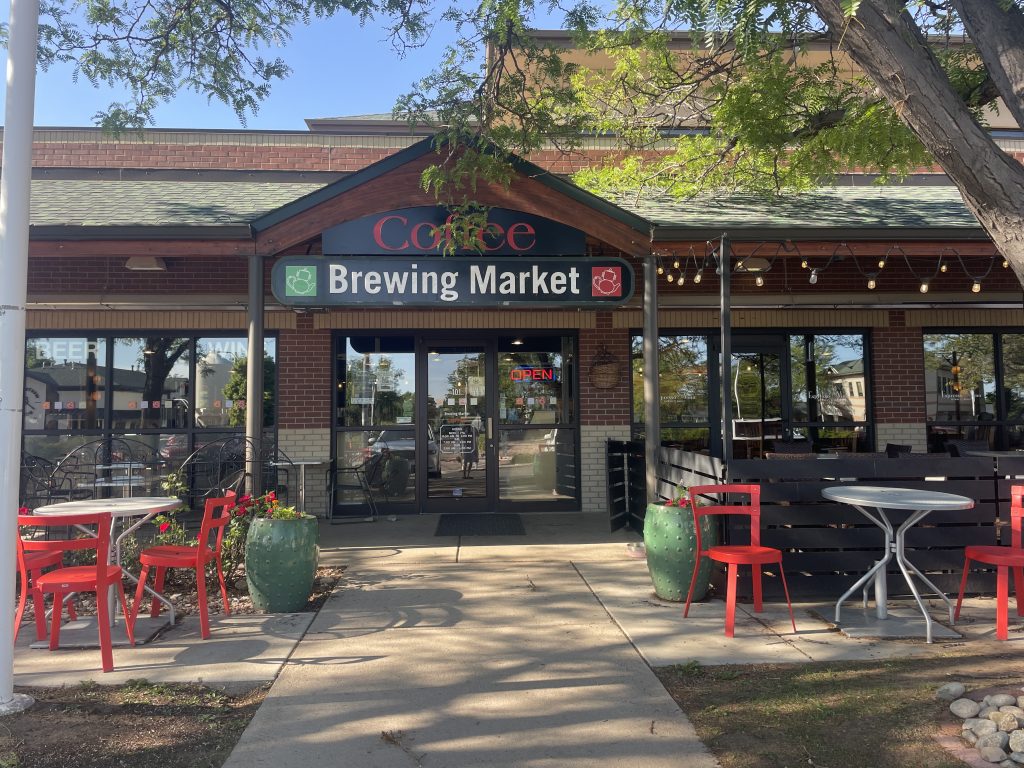
My friend, JJ, invited me this morning to join him at Brewing Market in Lafayette. We often have coffee at Starbucks, but I suggested that we start branching out and visit other unique coffee spots. I love the atmosphere and menu at Brewing Market!
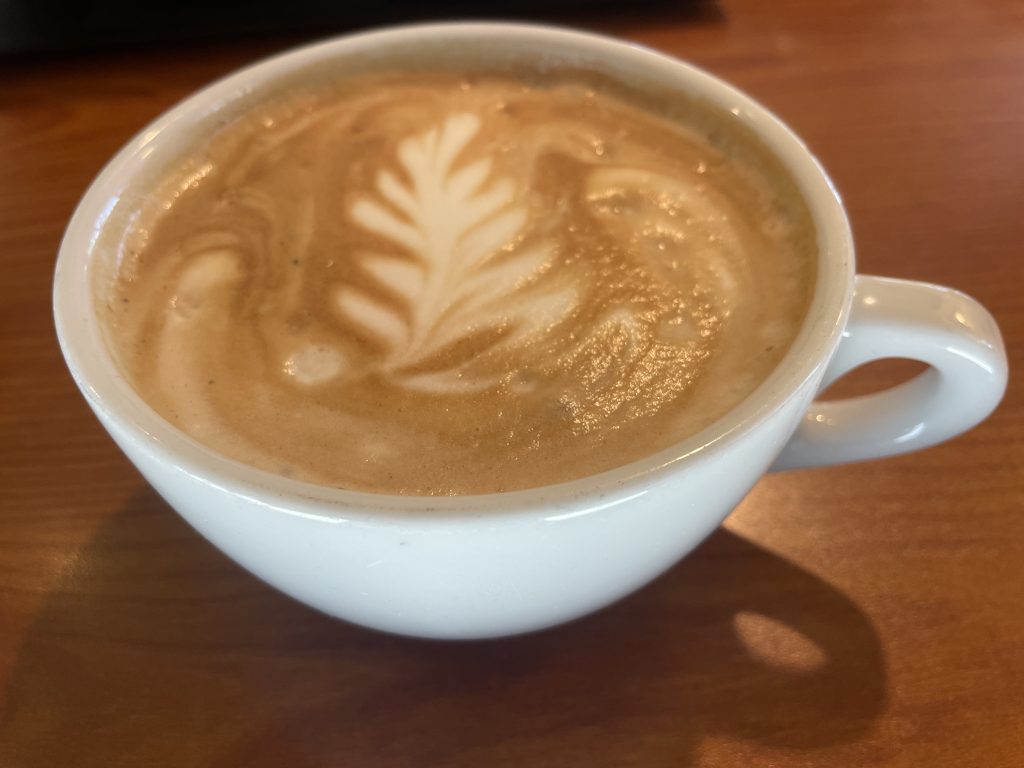
One of the things that I like best about coffee shops is getting a hot drink in a mug with a fun design made out of the latte. This was a sugar-free hazelnut cafe latte! Yum! I always love a hot drink in the mornings!
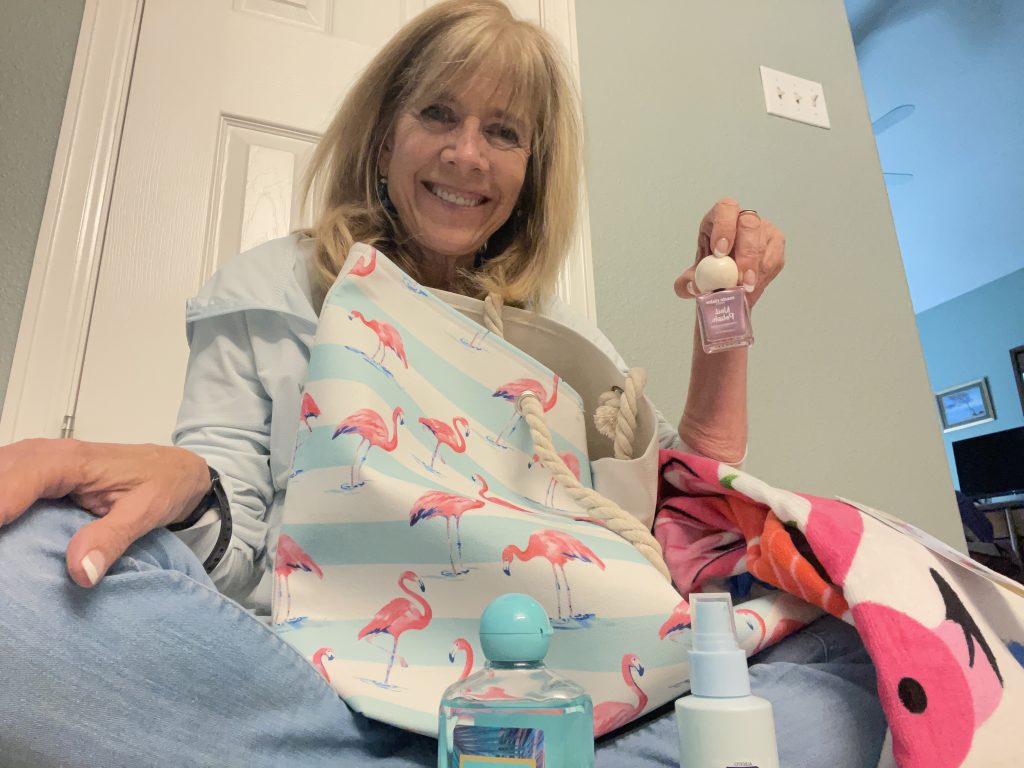
On my way home from Brewing Market, I stopped at one of my favorite stores: Dollar Tree! My new flamingo beach bag and beach towel were well-worth the $5 “splurge.” I also got some pretty lilac nail polish along with bubble bath and other goodies. (My newly-painted toe nails were tough to get in the picture, but they’re gorgeous.). I discovered the great deals at Dollar Tree during times of financial stress and it remains one of my favorite stores! Just call me “Frugal Flamingo.”
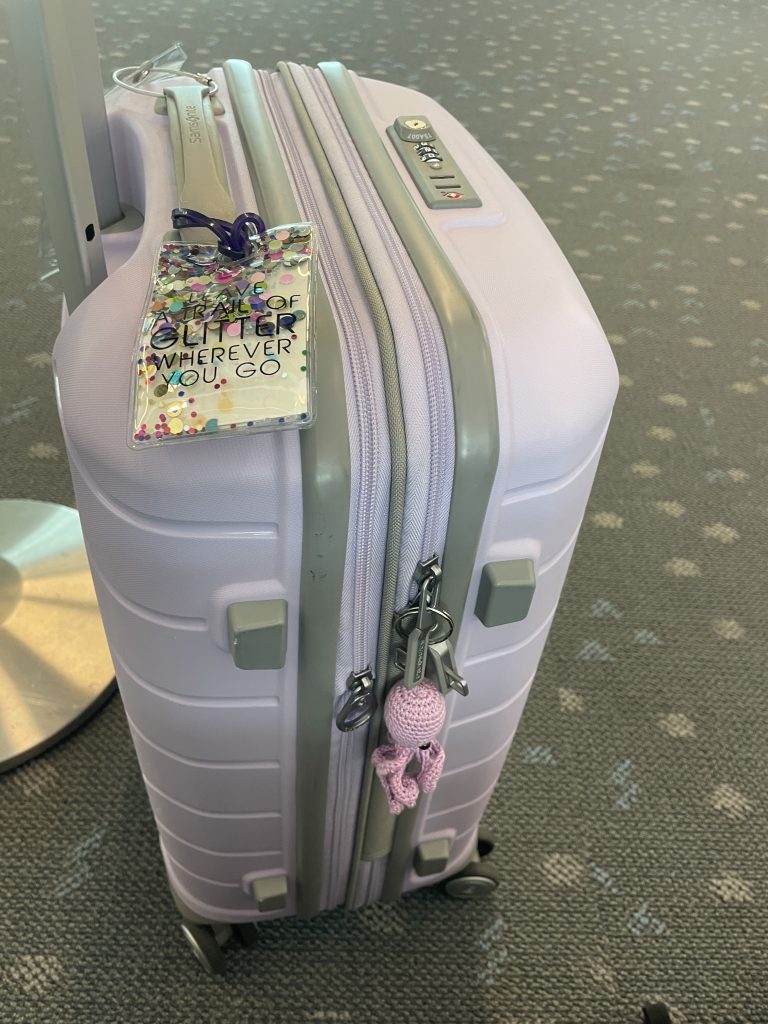
My little crocheted purple octopus, my Glitter Luggage Tag (gifted to me by good friend, Becky) and my lavender carry-on (gifted to me by Matt & Stella) make me happy. I was especially happy today because there was another carry-on EXACTLY like this in the storage compartment of the bus. If it hadn’t been for my little identifiers, I would have taken the wrong suitcase!
OK… I have a lot of other pictures of things that made me happy this weekend (Yay, it’s Memorial Day Weekend!) but my plane is boarding now, so this will have to be enough for this week’s Happy Post!
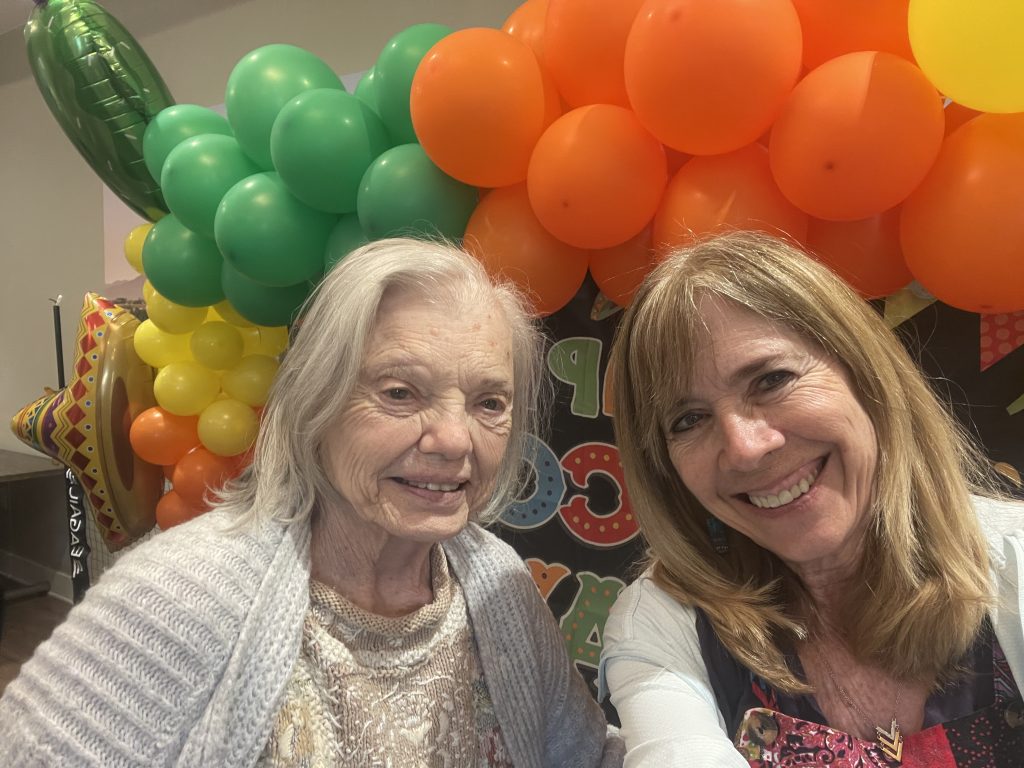
Since retiring, one of my personal goals is to find joy in each day! Thanks to all the quirky holidays, there’s no shortage of celebration ideas. Last week, while I was in California visiting Mom, there was a big Cinco de Mayo celebration at The Preserves of Woodland Hills.
Today was the mother of all holidays, though.. Mother’s Day! I was able to celebrate Mother’s Day early with my Mom in California and again, this weekend with my son, Scotty, in Colorado Springs.
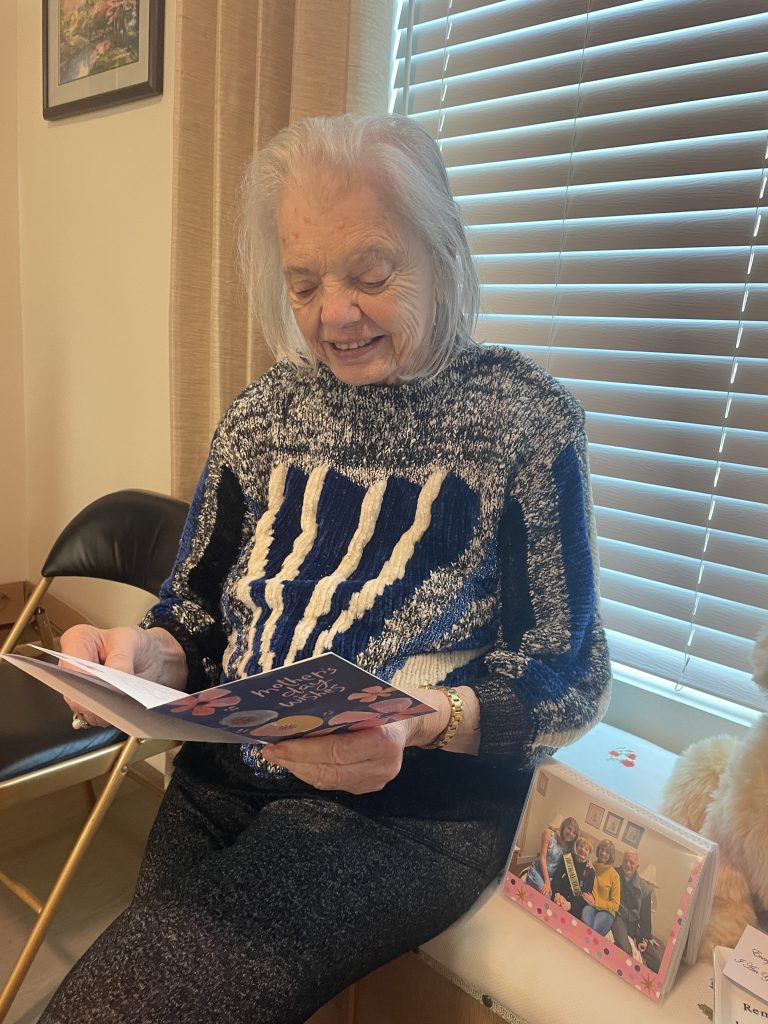
Celebrating Mother’s Day with Mom
Believe me, I don’t take my time with Mom for granted. At age 90, with dementia, Mom faces a lot of challenges. I’m grateful that she not only remembers me, but absolutely treasures our time together.
While I was out visiting her last week, we had an early Mother’s Day celebration. I made a little photo album for her. I hope it helps her feel less lonely when she’s in her room alone. (Although Mom remembers Michele, me, and Neal, she doesn’t remember our visits.)
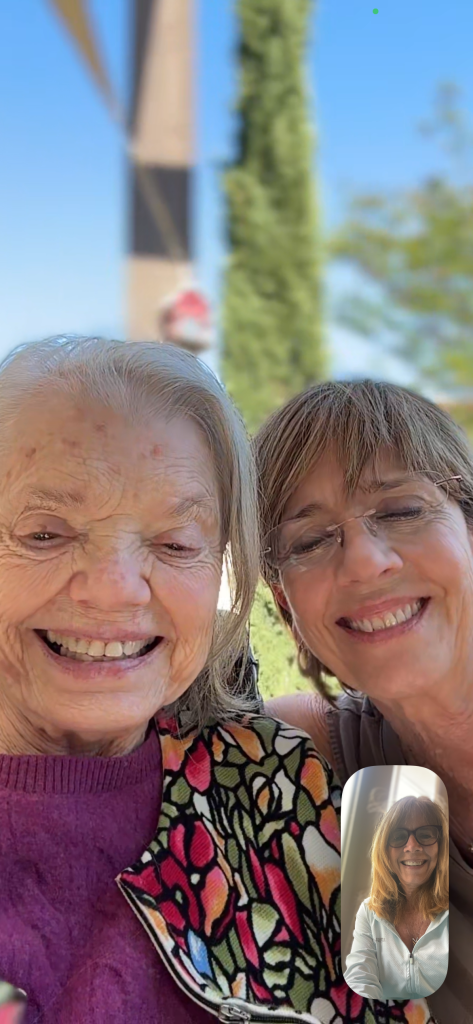
Mom now lives very close to my sister, Michele, and Michele does a wonderful job of making sure Mom has all she needs. It’s always fun when I get a FaceTime call with them both, as I did today.
Mother’s Day Call
Celebrating Mother’s Day with Scotty
I’m grateful that not only did I get to celebrate Mother’s Day early with Mom, I got to celebrate the weekend, with my son, Scotty.
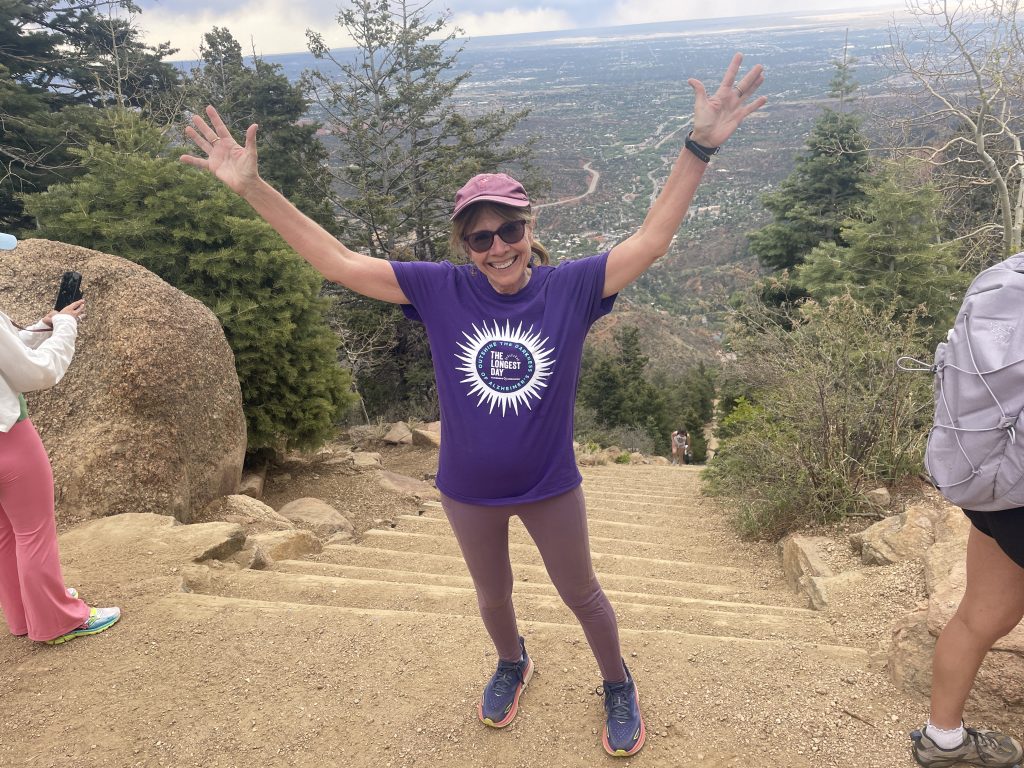
Scotty moved back to Colorado Springs this year. One of the traditions we have is to climb the Manitou Springs Incline together. The difficulty level is listed as “Extreme” and the Website says the visitors ages range from 7-70. I was surprised that 70 was the top of their age range! It’s not THAT hard if you go slowly. I absolutely intend to do it when I’m 71 and then I will suggest they update their Website with new age ranges (giving me credit, fame, and fortune.)
Top of the Manitou Incline at age 66
Afterwards, we celebrated with tacos and margaritas in the cute town of Manitou Springs.
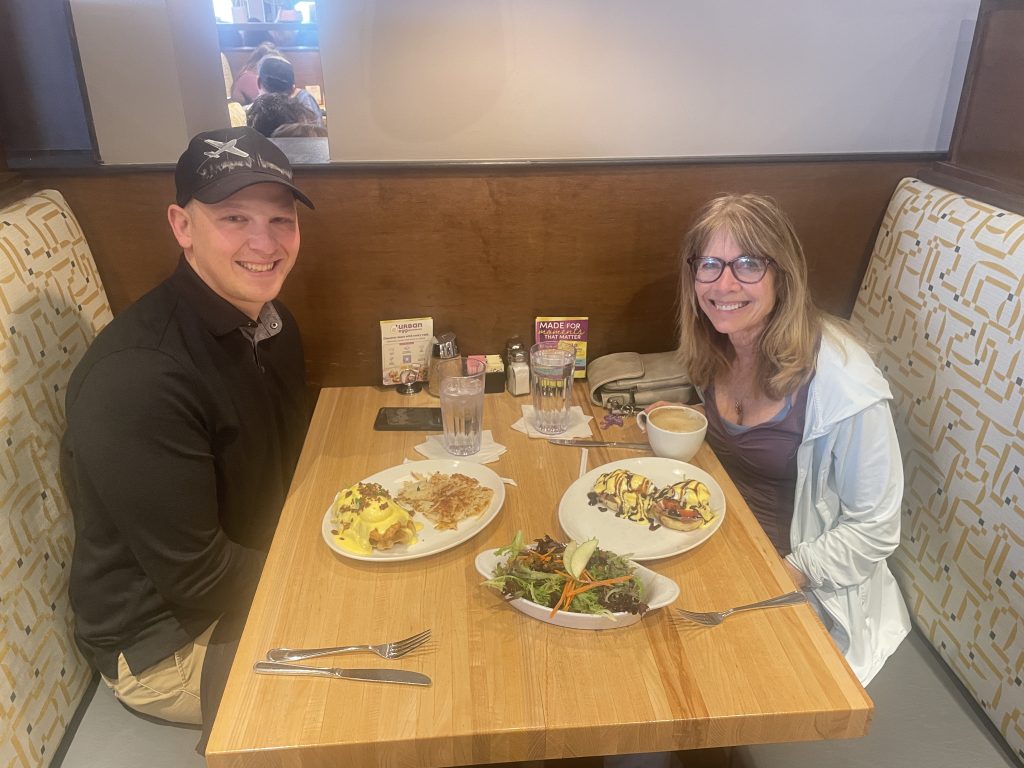
This morning, we continued our celebrations with more delicious food and drink at Urban Egg in Colorado Springs. Check out that Tuscan Benedict I ordered! Yum!
Tuscan Benedict at Urban Egg in Colorado Springs
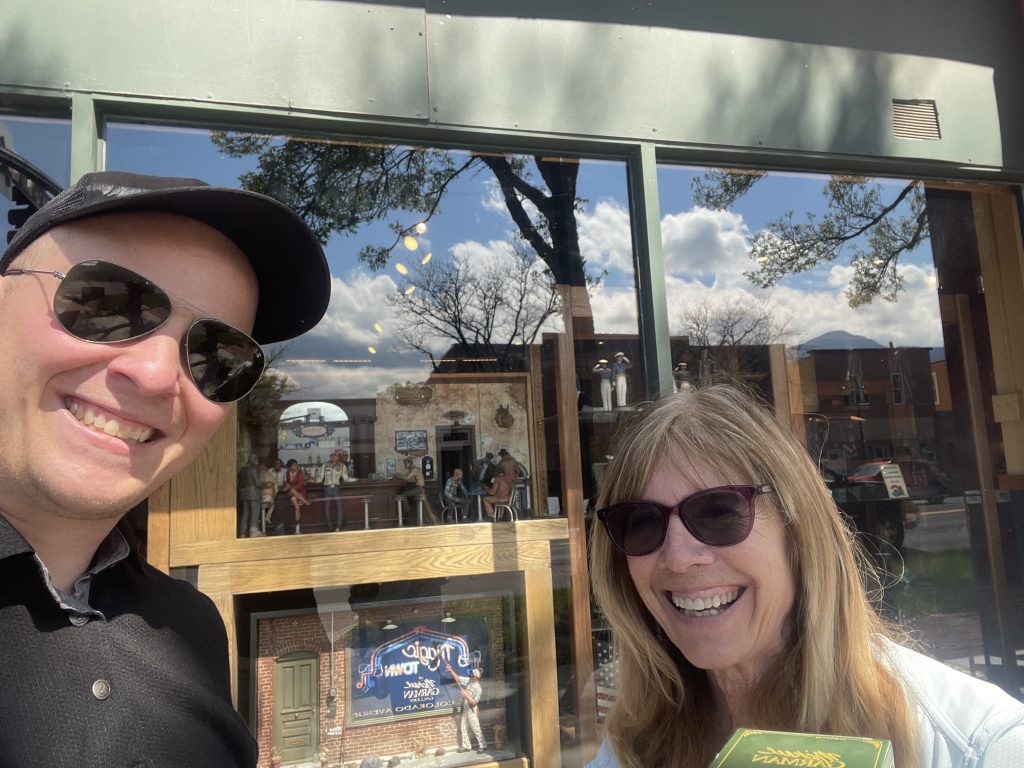
Our next stop was Magic Town in Colorado Springs. This was a very cool gallery highlighting the work of sculptor and artist Michael Garman. I’d read about Magic Town in my “Only in Colorado” newsletter and I’d wanted to check it out.
The scenes were miniatures, but also included illusions. Using mirrors, many of the houses had dual scenes or created the illusion of long alleys. The museum included challenging scavenger hunts which kept Scotty and I entertained for over 2 hours. They were fun and helped us notice many of the interesting details of the sculptures and miniature scenes.
Magic Town
As I drove home from Colorado Springs today, I realized how lucky I am to be celebrating Mother’s Day with my Mom and one of my adult kids. Life looks very different at 90, 66, and 31, but love, laughter, good food, and time together matter at every age. Whether it was tacos and margaritas after surviving the Incline, hunting for hidden details in Magic Town, or sitting beside Mom looking through photos, this week was a beautiful reminder to celebrate the people we love. That’s really what Carpe Diem Day is all about.
And next year, I’ll conquer the Incline again … or at the very least, enjoy the margaritas in Manitou Springs!